

[Today’s Iran War post should be finished by 7:30 AM EDT. Please return or refresh this page then to get your full information rations]
The mainstream media has so little mention of how Ansar Allah has don major damage to Saudi oil assets, critical and large facilities at Jazan and Alabiq, that one wonders if some sort of self censorship is at work. This is even more troubling given that the big escalatory risk in the Iran war is that of global depression due to destruction of petrostate energy infrastructure or desalination plants. So the press is sticking its head in the sand, as if not reporting on the start of worst case scenarios as they start to play out?
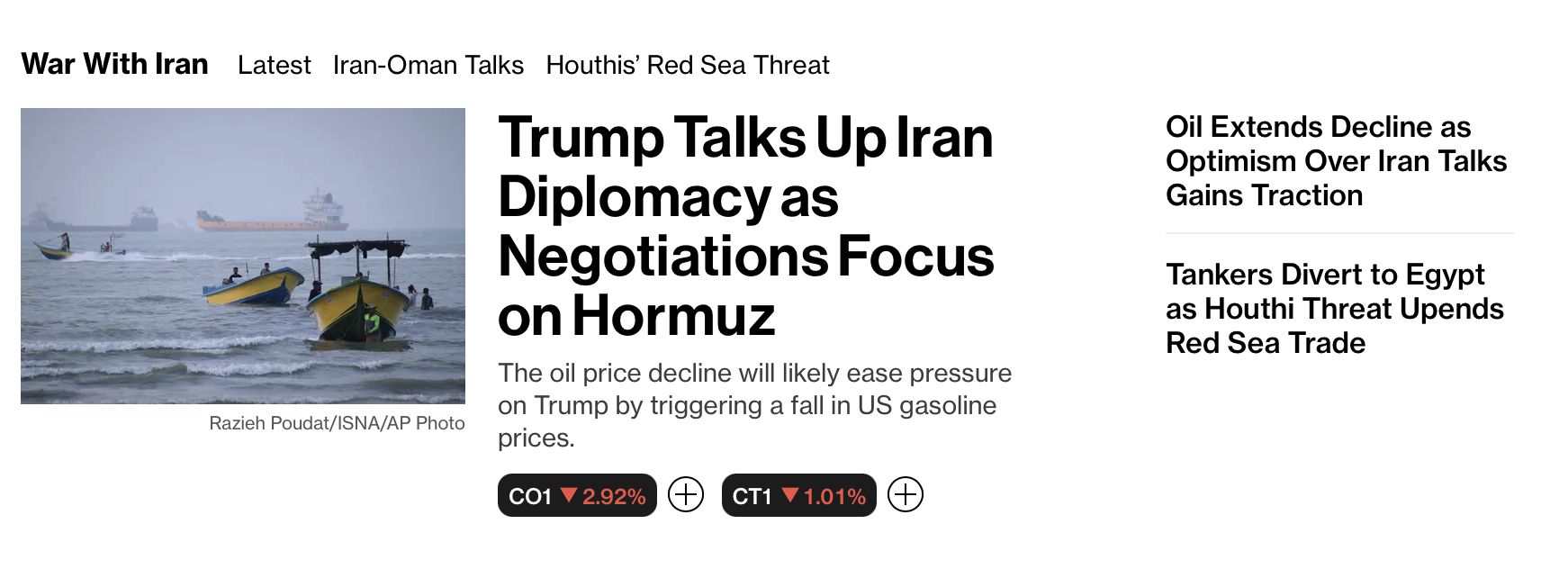
Consider the Iran war section of the Middle East version at Bloomberg:

The only Iran war story on the Wall Street Journal landing page, and it’s below the fold:

The Financial Times does have two prominent Iran pieces, but neither is on the Saudi infrastructure damage:

Notice how the AI market wobbles get pride of place.
Fortunately, independent media is picking up the slack. This is a short overview and usefully included the types and cost of Ansar Allah weapons as well as the notable absence of help from the US or Pakistan:
Dimitri Lascaris gives an in-depth account, including a description of the key facilities:
Lascaris notes that the Saudis have not acknowledged that the state-of-the-art Abqaiq facility was hit and have been trying to present the impression that any strike was parried. But Lascaris provides images and accounts from sources he regards as reliable that suggest otherwise. He also provides images and videos that show that a very big fire at the Jazam site is still ablaze.
Additional visuals:
💢 BREAKING: Drones struck Saudi Aramco’s Abqaiq crude-processing facility, the kingdom’s largest, with satellite imagery indicating potential damage to multiple processing units.
Abqaiq stabilizes the bulk of Saudi crude before export, making it one of the most critical nodes… https://t.co/tgN9PeSmgy
— Drop Site (@DropSiteNews) July 27, 2026
I have yet to see much on the new attacks:
Abqaiq under attack from drones again. https://t.co/1Uow2R5tEZ
— HFI Research (@HFI_Research) July 28, 2026
For sake of completeness, some images from the strikes on Jazan:
BREAKING: Yemen’s Houthis have reportedly struck Saudi Aramco’s Jazan oil facilities with multiple ballistic missiles, with videos appearing to show a massive fire and mushroom-shaped plume rising over the area.
Regional reports indicate at least five ballistic missiles were… pic.twitter.com/TczpnG20kY
— The Hormuz Report (@HormuzReport) July 25, 2026
I have not seen confirmation of damage to the pipeline:
Saudi Arabia sent a drone over Yemen that, in retaliation , destroyed one of the most important oil pipelines still operational towards Yanbo’, the Red Sea, since the tankers navigation in the Strait of Hormuz is disrupted.
— Elijah J. Magnier 🇪🇺 (@ejmalrai) July 27, 2026
Breaking Points devoted a segment to the impact of the loss of Bab el-Mandeb transits to Saudi and world oil supply:
Note that Jazan is the smaller of the two operations:
⚡️🚨 Saudi Aramco shuts Jizan refinery (400,000 bpd capacity) following attack on July 25. (Reuters via Al Mayadeen Breaking)
— Middle East Observer (@ME_Observer_) July 28, 2026
Oil mavens are gobsmacked at the latest action in the crude oil markets in light of these developments. From Brett Erickson on Twitter:
With both Abqaiq and Jazan being struck in recent days, both CRITICAL for Saudi oil operations, people need to begin accepting that the Iran War may be entirely out of the control for President Trump now. These aren’t “small nodes”, Abqaiq is Aramco’s largest oil processing facility, and Jazan is Aramco’s fifth largest refinery.
Pair this with the double blockades effectively of the Strait of Hormuz and the Bab al-Mandeb… I’m really not sure how much more the global economy can take at this point.
Amazing to see oil keep falling while the Houthis are blowing up key Saudi oil infrastructure. pic.twitter.com/Pn70NGGIYh
— Lukas Ekwueme (@ekwufinance) July 27, 2026
Every time we get artificial intervention in the Brent price the crack spread moves to compensate. It ain’t about refining capacities, folks. 🛢️ https://t.co/qvitLWKEwU
— Philip Pilkington (@philippilk) July 27, 2026
Early in the talk, Sagaar provides an update on a development we described. A Lloyd’s of London advisory group had recommended against insuring vessels servicing Saudi ports on Red Sea routes. We said it was not clear how many policy-writers and vessel operators would act on this proposal. Some have. From a lightly-edited machine transcript:
This was huge news which really was under reported in American media. So, the top shipping insurers have told brokers they will no longer sell war cargo insurance to any Saudi Arabia linked ships in the Red Sea following the attacks by Yemen’s Houthi rebels in a further risk to exports from the region.
Several of the leading maritime marine war insurers at Lloyd’s of London said they would exclude vessels, quote, with any Saudi touch points from coverage including ships traveling from under other flags that have made past calls at Saudi ports. This is Titanic news in the oil market because as we have shown people previously, it’s not the Strait of Hormuz that gets shut down or opened by America or by Iran to a certain extent. It’s the insurance companies on whether they’re going to be allowed to sell.
Remember in the early days of the war, Trump actually created this wartime insurance board which would enable these ships to go through through Strait of Hormuz with an insurance contract, with kind of an insurer as last resort. That does not yet exist in the Red Sea. It also shows that the Houthi threat to target any vessel which docks at a Saudi port and tries to go through the Bab el-Mandab Strait is fair game. And obviously, now, because they have shot at several vessels coming through the Red Sea, that they are able to just tell the insurer effectively signal to the insurers they have this deterrent capability, the insurers cancel it, which means very little oil from Saudi Arabia will be able to flow through.
Later in the show:
There have been multiple now attacks on Saudi oil facilities from these either Iran, from the Houthis, or for now from the Iraqis. So, over the weekend, this was on top of the Aramco strikes I just talked about, fired missiles and drones at two of their strategic oil facilities actually on the Red Sea. Both at the Yanbu facility but at another one. Iran previously had had multiple strikes that were launched at Saudi Arabia or at Saudi Arabian facilities. Many of these more recent ones though are coming from the Iraqis and from the Houthis. And so, really what you can see is that this new front of the war arguably is, you know, the tipping point, you know, if you will, for a decision that has to be made on whether Trump is going to go full-on invasion or full-on fold. Now, you know, with this with the pipeline and with oil prices and all that where they are, it may not necessarily be, you know, today, tomorrow, but the bleeding and the restriction of supply will, of course, as we said earlier, eventually catch up to reality.
The Saudis adjust to new realities:
longer route to add $5 per barrel to Asia buyers >>
Saudi Aramco considers new pricing for Sidi Kerir oil exports to Asia, sources say
Saudi Aramco is considering a new pricing mechanism for crude loading from Egypt’s Sidi Kerir port for Asia to reflect higher shipping costs…
— Tracy Shuchart (𝒞𝒽𝒾 ) (@chigrl) July 28, 2026
As an aside, Ansar Allah has denied that Iraq militias had anything to do with the Saudi strikes and seems almost annoyed that Saudis won’t give them credit. From PressTV in Ansarullah: Confused Saudi accusations expose failure after Yemeni strikes on Jizan and Yanbu :
Yemen’s Ansarullah resistance movement has described recent statements by the Saudi enemy as clear evidence of its confusion and strategic failure following the successful operations carried out by Yemen’s armed forces against vital targets in the cities of Jizan and Yanbu…
🔴 Yemen’s Ansarullah:
🔺 Saudi enemy statements show the regime’s confusion following attacks by Yemen’s armed forces on Jizan and Yanbu.
🔺 The Saudi accusations against Iran and others are an attempt to evade responsibility for the blockade of Yemen. pic.twitter.com/xjO6vaBys3
— Press TV 🔻 (@PressTV) July 27, 2026
The comments come after Yemen’s Armed Forces announced two major military operations on July 25 targeting sensitive Aramco oil facilities in the Red Sea cities of Jizan and Yanbu. The operations, conducted with ballistic missiles, cruise missiles, and drones, were launched in direct response to Saudi airstrikes on Yemen’s strategic port of Hodeidah and nearby Kamaran Island.
Yemeni military spokesperson Brigadier General Yahya Saree confirmed that the strikes achieved their objectives, hitting critical infrastructure and underscoring the growing qualitative capabilities of the Yemeni resistance. Visual evidence, including satellite data and footage circulating widely, showed fires and smoke rising over the targeted facilities, despite Saudi claims of interceptions that Ansarullah has dismissed as a cover-up.
Dhaifallah al-Shami noted that the Saudi regime’s statements reflect its deep confusion in the face of these precise operations.
He said Riyadh is using baseless claims against Iran and the Axis of Resistance merely as a means to escape accountability for the brutal siege that has devastated Yemen’s civilian population, while also attempting to pressure other regional capitals in line with US directives.
Similarly, from Middle East Eye’s live feed:
Islamic Resistance in Iraq denies it carried out strikes on Saudi oil facilities
The Islamic Resistance in Iraq rejected allegations that it carried out drone attacks on oil facilities in Saudi Arabia.
Earlier, Riyadh accused “Iranian-backed militias” for the strikes on Monday.
The network of Iran-aligned groups said the allegation “only strengthens our conviction that hostility towards Iraq and its people is an inherent characteristic of this regime”.
“These fabrications are nothing but an attempt to justify their inability to respond to the painful Yemeni strikes that have targeted the heart of their infrastructure,” it added, warning that any “foolish action” by the kingdom would be met with a “harsh response”.
I am not spilling many pixels (yet) on the idea the Ukraine is mixing things up in Iraq against Iran because the disinfo to signal ratio is way too high:
Either Ukraine is conducting false flag ops inside Iraq as alleged, which would be very weird; or Iraq’s NSA is making shit up to defuse Saudi anger over yesterday’s drone attacks on the ARAMCO plant in Abqaiq.https://t.co/7i0qweY4YC
— Mark Ames (@MarkAmesExiled) July 28, 2026
As far as what Netanyahu might be plotting, Almayadeen summaries from Israel media suggest that he would be happy with “full scale war” but would also be content with a continuation of the status quo:

However, over the weekend, reader raspberry jam cited other news reports and public statements that suggest Israel is ready to go on a more aggressive footing if Trump agrees:
Ahead of Trump meeting, Netanyahu lays the groundwork for Israel to rejoin Iran war (Ben Caspit, Al-Monitor):
As he plummets in the polls, Netanyahu is attempting to justify reopening the Iranian front, a move the security establishment would rather avoid, sources argued. They pointed to reports on the Mossad uncovering an Iranian espionage ring and on Iran moving thousands of centrifuges into Pickaxe Mountain, saying Netanyahu and his associates are using leaks and releases to sway public opinion. The push is expected to top the agenda during Netanyahu’s visit to Washington … While Trump remains undecided about resuming war against Iran, Netanyahu sees an upside to such an escalation, preferably with Israeli involvement …
Netanyahu has plunged in the polls … Political sources say that more war could serve Netanyahu well within his party, which is due to hold primaries next week. Netanyahu, fearing a host of populist candidates who would further erode the party’s prospects at the ballot box, announced on June 19 that the primaries might be delayed “for security reasons” … A senior Israeli diplomatic source [said:] “Trump can resume the war with Iran but doesn’t want to. Netanyahu wants to but can’t” … “Trump may find himself reluctantly dragged into another round,” he added …
Another linked piece in the post is this one from Ma’ariv byline Anna Barsky– not paywalled but you’ll need to run through a translator:
Israeli sources estimate that the IDF is prepared to act against additional targets in Iran, if the United States gives the green light. Possible targets include energy infrastructure, along with other targets remaining in the Israeli target bank. Jerusalem estimates that such an Israeli action could trigger a direct Iranian response against Israel, and therefore coordination with Washington has clear operational significance.
So far, no American confirmation has been published that a decision has been made to allow such a move, and Washington continues to examine several alternatives. The Gulf states are also wary of direct Israeli involvement, fearing that it would widen the conflict and harm regional stability. One of the options being examined is a graduated move: American escalation first, and only then a decision on whether to allow Israel to join openly.
The sensitivity surrounding the trip is also heightened by past precedents in which political meetings or visits by senior officials preceded military operations and served as part of diversionary efforts. This is not evidence of an imminent move, but the timing and focus on Iran give each detail of the schedule special significance.
Also, yesterday a Likud MK backbencher blurted out that “everyone knows we’re about to attack Iran” as part of talking about something unrelated to the media and there was a Thick of It style fracas where other, higher-ranking MK and cabinet members had to come out and say that the guy had no idea what he was talking about and out of the loop.
Robert Barnes, in an informative talk with Judge Napolitano, describes what passes for decision-making in Trump’s circle, including who has access and Trump’s escalating grandiosity. He highlights what may come out of the Trump-Netanyahu chat:
From a lightly edited machine transcript:
Napolitano: When uh Prime Minister Netanyahu comes to the White House tomorrow, either before or after Senator Graham’s funeral, uh will Trump say to him, “Get the hell out of Gaza. Get the hell out of Syria.
Get the hell out of Lebanon?”Barnes: That proposal has been made to the president to do exactly that. Even a plan has been laid out to get, as is now leaked over the weekend, to get uh to for Trump to tell Israel to pull out of Syria, Libya, Syria, Lebanon, and Gaza.
And that he that they actually have a plan. They’ve actually put it together. People like Eldrich Colby, under secretary of defense, have gone forward and created that potential proposal for the president. People like Richard Barres, a pollster close to the president and the vice president, has advised him of exactly that. told him that he needs to have a high-profile public event where he smacks around Bibi to the entire world because otherwise people perceive him as Bibi’s bitch. And the fact that how popular the memes are of the president being literally bent over by Bibi has affected Trump. So there’s a chance of it.Most of us are not confident that he will have the courage to truly publicly stand up to the Israel lobby even though it’d be the best thing he could do politically in the near-short term to try to restore some confidence with the anti-war and libertarian parts of the Republican base that right now are enraged at Trump…
The general assumption is that BB will be on his best behavior this time around uh because he wants to avoid the public criticism and and President and Trump needs a little bit of distance. But you you can’t trust BB at any time, at any point, any place….
But you can’t trust BB not to try something. And the suspicion is that he will indeed try to get Trump to reescalate again.
On the Oman-Iran negotiations over the Strait of Hormuz: I would take any reports of Iran concessions or “flexibility” with a fistful of salt. Iran has no reason to give up control of the Strait until oil prices and/or diesel shortages have hit a level that the US economy is under stress and the Trump Administration is facing a domestic crisis. Even that might not be enough to force the US to face what the Russians like to call “realities on the ground” but there is no prospect of that happening before then.
In a new talk with Mario Nawfal, Professor Robert Pape calls for a long conflict, with the US starting to consider boots on the ground (in a big way) in January 2027. I harbor considerable doubts, since Pape’s research has never included a case where the opponent was able to inflict such high costs on the US, including a possible economic and/of financial crisis. In addition to that, there is a non-trivial possibility of severe internal schisms, starting with Trump barring 2026 elections via a declaration of martial law or finding ways to meddle in key jurisdictions. We said this war would be a test to destruction. Pape ignore that the US could start to fracture before Iran does.
Admittedly, on the “open the Strait” front, Iran could be subject to pressure from China. China has repeated its pious mantra that it wants a peaceful outcome. China, with its vast reserves and ability to get some oil from the Middle East via Iran exports, could see great advantage in weakening the US and Europe via energy and other critical commodity price increases and shortages.
The flip side is that a global economic depression is not in China’s interest. Even though its export dependence is lower than in the past, its domestic economy is so weak that it can’t afford to suffer much of a drop in exports. Keep in mind that its biggest export market is Southeast Asia, which is first in the firing line of economic damage from continued Strait of Hormuz closure.
On top of that, Professor Mohammed Marandi has taken to highlighting anti-Iran/pro-Zionist bias on Aljazeera,2 so one needs to be mindful of spin. And there has been a tendency throughout this conflict of parties to negotiations hyping the odds of a resolution and then the media overegging their pudding. From Aljazeera’s live feed:
Iran demonstrating ‘flexibility’ over Strait of Hormuz operations
Oman and Iran held several rounds of talks in Tehran on Friday and Saturday.
The Omanis have proposed establishing a regional consortium of Iran and the Gulf states. It will manage maritime traffic through the Strait of Hormuz by providing “security” for the ships attempting to pass.
The Omanis have proposed the strait be toll-free; however, that doesn’t necessarily mean the ships won’t pay fees. They have come up with a model in which, as ships pass through, they will pay a “voluntary service fee” to ensure environmental protection.
The Omanis are now suggesting three lines for the maritime traffic: one that runs through Iran’s territorial waters, an international one, and one through Omani territorial waters.
Once this has been accepted, Iran will take responsibility for mine clearance, particularly in the international line. However, the technical negotiating teams have not yet finalised this.
Despite public statements, our sources tell us Iran is demonstrating some flexibility.
Contrast that cheery account with:
Iran rejected a proposal during talks in Oman for the southern shipping route through the Strait of Hormuz to remain open until Iran-Oman negotiations concluded and be closed afterward, Deputy Foreign Minister Kazem Gharibabadi said.
— Iran International English (@IranIntl_En) July 27, 2026
Shorter:
The funniest thing about the Oman proposal was that it was exactly what they proposed last month before Iran started blowing up ships going through the Oman lane!
Either Iran controls the Strait of Hormuz or it doesn’t. Let’s all stop pretending Oman even has a say in this.
— HFI Research (@HFI_Research) July 28, 2026
Some odds and ends:
A good primer on why the US is not energy independent, focusing on domestic production versus our mix and location of refiners and transportation modes.
Trump: “The Iran money that WE control will be used to pay for damages. We’re gonna use Iran’s money to pay for the damage they did.” pic.twitter.com/VyMCgUOmL5
— Open Source Intel (@Osint613) July 27, 2026
If you click though to see the two pages, the calm tone of the text is at odds with the scary charts:
GOLDMAN SACHS ON EUROPEAN NATURAL GAS pic.twitter.com/ySPIBeLgPz
— Jack Prandelli (@jackprandelli) July 27, 2026
Done for today! See you tomorrow!
___
1 See:
Al-Jazeera is the biggest psyop in the region since 1996. They’re the wolf in Palestinian clothing.
PS: I am not talking about the honest journalists who work on the ground and put their lives in danger. I am specifically talking about Al Jazeera’s owners.…
— Kevork Almassian (@KevorkAlmassian) June 18, 2025


 By
By