

The President of the Community of Madrid, Isabel Ayuso, has stirred controversy during her visit to Mexico, where she praised the Spanish “conquistador” Hernan Cortes. Mexico’s president, Claudia Sheinbaum, pretended not to know her name in a press conference. However, what lies behind Ayuso’s trip to Mexico extends further than a diplomatic incident. It’s the crystallization, in the Spanish context, of the global clash between right and left, progressives and conservatives, or, if you wish, globalists and sovereigntists.
Spanish President Pedro Sanchez has taken a deliberate stance against many policies associated with the global conservative movement led by the Trump administration. His government has repeatedly condemned—and named—the Israeli genocide in Gaza. It has recognized the state of Palestine. It has called for a review of the EU cooperation agreement with Israel and has boycotted its participation in the European music festival, Eurovision.
Sanchez spoke against U.S. actions in Venezuela, condemned the U.S. and Israeli war in Iran, and barred the U.S. from using its military bases in Spain for that purpose. He has also opposed Trump’s demand for NATO European allies to increase their military budgets to 5%. All of this has gained him Trump’s contempt and threats. Furthermore, in a move antagonizing Trump’s anti-immigration rhetoric—and that of many European countries—his government has approved the legalization of about 500,000 undocumented migrants in Spain.
The Spanish President has also conducted four state visits to China in four years and has signed cooperation agreements with that country. He advised the EU to reconsider tariffs on Chinese EVs, and when they were approved, Spain abstained.
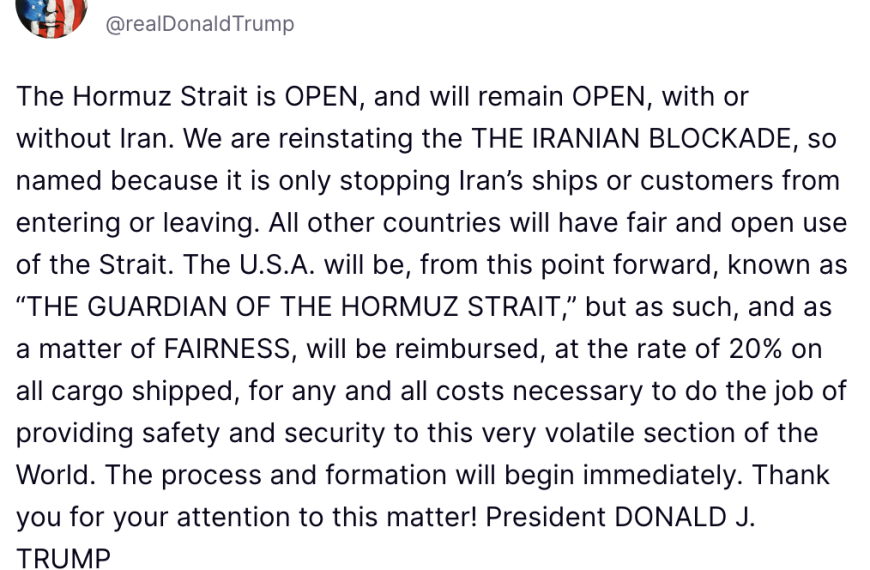
Sanchez’s foreign policy actions and his rhetoric in support of international law have garnered him the acclaim of many, not only on the socialist left, but also from those who oppose the Trump administration’s imperial foreign mandates. Iran allegedly allowed the transit through the Strait of Hormuz of tankers linked to Spain in the midst of the war in response to Sanchez’s antiwar position.
There are several reasons for this departure from traditional Spanish quietism in international affairs. That is, with the infamous exception of former President Jose Maria Aznar, who wholeheartedly supported the U.S. invasion of Iraq despite some of the largest protests in the history of Spain against it.
I don’t necessarily doubt that the Spanish President might have strong feelings against the genocide in Gaza. However, he also likely derives political benefits from taking such a vocal stance. I think this view is justified because he shifted Spain’s neutral position regarding Western Sahara in support of Morocco, which led to criticism from some of his coalition parties. I’m not judging that move—it might even be politically wise to stabilize relationships with the North African country—but it did erode his support among the Spanish left (ironically, he was also heavily criticized by the right).
By taking such a strong stance against Israel, Sanchez is regaining that support locally while also becoming a referent internationally for humanitarian causes. Furthermore, he is antagonizing the Spanish right-wing parties and wielding a heavy weapon against them. The Spanish political right, Partido Popular, and the far right, Vox, have been repeating the Zionist narrative, as they have been supported by the national Israeli lobby: ACOM.
Isabel Ayuso, President of the Community of Madrid and the most nationally recognized face of Partido Popular—the “center-right” party in Spain—who is preparing her profile to run for national elections, has strong links to David Hatchwell, a Spanish-Israeli businessman, founder of a pro-Zionist foundation, and friend of Netanyahu. Santiago Abascal, Vox’s leader, visited Israel and was received by Netanyahu in the midst of the genocide.
There are other contextual reasons for Spain’s support for Palestine. Historically, Spanish foreign policy has positioned itself as a bridge between Europe and the MENA region. I would also argue that the sensibilities of Spain’s population are also generally more inclined to sympathize with other Mediterranean people than the populations of northern European countries, especially those tending to the left. However, Sanchez’s vocal opposition to Israel is helping him repair his profile at home, antagonize the right, and is giving him an international flair. His opposition to Iran and Venezuela not only supports this, but casts him clearly as an antagonist to former president Aznar, and, by extension, Bush
Sanchez has positioned himself as a leader who defends international law, democracy, and human rights—three values pivotal to the liberal order that are being questioned today. He also calls for multilateralism and international cooperation. These were the main subjects of the IV Summit in Defense of Democracy, which was held in Barcelona in April 2026. The summit gathered progressive leaders from around the world, including Brazilian President Lula da Silva, Mexico’s Claudia Sheinbaum, South Africa’s Cyril Ramaphosa, and Colombia’s Gustavo Petro.
There was also a host of delegates from other countries, including U.S. Democratic Senator Chris Murphy and Minnesota Governor Tim Walz. Zohran Mamdani, Bernie Sanders, and Hillary Clinton all sent video messages. Another participant and, allegedly, partial sponsor of the event was Alexander Soros, whose relationship with Pedro Sanchez dates back at least to 2018, and who has explicitly endorsed him, praising his “sound policy—both principled and pragmatic.”
We must then assume that George Soros’ Open Society Foundations, of which his son Alexander is the current president, is in support of both the summit and Pedro Sanchez. This would help explain why Sanchez has faced little hardship for his anti-Trump policy stance. For example, in an unprecedented move, he was the only NATO member allowed not to raise the defense budget to 5%, alleging justified concerns over Spain’s ability to do that while maintaining the welfare state.
I will venture into a little hypothetical now. I suspect that international liberal elites are cultivating Sanchez’s profile and giving a hand by promoting him as an excellent administrator. See, for example, the December 2024 The Economist article in which they declared Spain’s economy as the best in the world and attributed much of it to Sanchez’s government. Spain’s economy is going through a growth rate that eclipses the rest of Europe, but it is difficult to credit only the socialist government.
Sanchez’s government has had a difficult time passing any legislation, as his coalition is in a minority and depends on arrangements with Catalan and Basque separatists. Due to this, his government has not been able to approve a budget and fiscal blueprint, and it operates by extending the 2023 one. Furthermore, GDP growth has not really transformed into per capita growth, which remains below the EU average. Much of Spain’s growth rests on tourism and immigration, which have compounded over the years. I’m not saying here that the Spanish government might not be taking some appropriate measures, only questioning whether the current state of the economy is solely due to them, as The Economist article and others seem to propose. On the other hand other, like the FT, seems to suggest the opposite.
Sanchez is a good politician and a brilliant tactician. He staged an unlikely comeback in 2017 after being forced to resign as the Secretary General of the Socialist Party. He became president in 2018 after the impeachment of the former Partido Popular President, Mariano Rajoy. He has survived two elections and managed to continue being president without actually decisively winning either; in fact, in 2023, the Partido Popular won more seats. Critics accuse him of being a master political manipulator; supporters see him as a politician capable of conceding to achieve the best for everyone. I suspect he has been “chosen” for a greater role.
Liberal politics, especially in Europe, lack clear role models capable of having a leading voice. Macron, Merz, or Starmer cannot claim that mantle. They are opportunistic utilitarians with more than questionable records, and their rhetoric is becoming less liberal every day. By liberal, I mean left-leaning, progressive, and globalist—not just liberal in the classical sense. Not only in Europe, but the rest of the world is not in much better shape. Lula da Silva is getting old; Gustavo Petro is on his way out. Mark Carney, perhaps, is also trying to fit that mould, but his past as a central banker does not help in the eyes of many. Latin America, which had been a cradle of such movements, is changing. Sheinbaum remains, but is very busy with her northern neighbor.
Pedro Sanchez, on the other hand, has the legitimacy of having gone through the electoral process since the party primaries. He is the leader of a small-to-middle power whose economy is booming. Despite some national corruption scandals, he’s managed to distance himself from them. He is a self-declared supporter of the EU. He has taken a stance against Trump, wars, and anti-immigration policies. He supports international institutions, multilateralism, and multiculturalism, as well as progressive gender politics and the green agenda. He even espouses some Global South rhetoric. If there was an office for the leader of progressive democratic liberals worldwide, he ticks all the boxes.
This is the context in which the Madrid President’s visit to Mexico must be understood. The Spanish right-wing lobbies are trying to raise her international profile by making her a figure of the Spanish-speaking right. The journey was a complete failure. It was so out of tune with Mexican sensibilities that she had to cut it short and play the victim.
The story starts a little while ago. In 2019, former Mexican president AMLO demanded the Spanish crown apologize for the human rights abuses conducted during the 16th-century conquest. Both the Crown and the government, then headed by Sanchez, refused. That led to a diplomatic spat and a “pause” in relationships in 2022. It could be argued whether present-day Spanish institutions are responsible; however, there’s no denying what happened. This is what Sanchez’s government has conceded since October 2025, leading to a renewed relation between both countries.
Notwithstanding the historical truths of AMLO’s demand, the reasons for this type of action are usually more related to present-day politics. At the time, many accused him of trying to divert attention from problems at home. As for now, Sanchez’s acceptance is a way of repairing his relations with an important progressive leader, Sheinbaum, and continuing to raise his profile as a Southern champion.
Ayuso tried to counter that. Well, the lobby behind her tried; she is mostly a reactive politician with some charisma but little initiative. She went to Mexico on tour as part of the promotion of a musical called Malinche. Malinche is a controversial figure. She was an indigenous woman given to the Spanish troops after a battle; she became Hernan Cortes’s translator and had a son with him. The musical and Ayuso tried to praise the goodness that came from the Spanish conquest and the “mestizaje,” even saying that Mexico would not exist without it.
But the interesting thing is that the musical is co-produced by Maria Laura Medina, who is the wife of Ricardo Salinas Priego, one of the richest men in Mexico. Ricardo’s cousin, Roberto Salinas León, is the Director of the Center for Latin America for Atlas Network. The Atlas Network has extensive links to the Partido Popular through former President Aznar’s foundation, FAES. The Atlas Network is an international umbrella organization for neoliberals and is one of the leading organizations funding and implementing their ideologies in the Spanish-speaking world. David Hatchwell, the leading Spanish pro-Zionist, has friendships with Ayuso, Aznar, and other right political figures. Ayuso was hosted in Mexico by Alessandra Rojo de la Vega, the young mayor of a middle Mexican town in opposition to Sheinbaum.
Isabel Ayuso’s trip was an attempt to raise her profile internationally in order to counter Pedro Sanchez nationally. The idea is that if he loses the next elections, his international projection would suffer a great blow. I believe that those behind her have underestimated the forces backing Sanchez.


 By
By