
Perhaps you’re sick of hearing a mic’d-up umpire scream “stand” every five seconds as if he’s hollering at a bunch of pre-school kids on an excursion.
Perhaps you preferred when television replays were mostly about showing us a screamer in slow motion rather than trying to convince us why the latest free kick made sense.
Or maybe you’re happy to let a goal umpire make a decision and stick by it, rather than allowing audience expectations of modern broadcasting to interfere.
Loading Instagram content
It’s fair to say the AFL has been copping a lot of criticism this year, also drawing fire for an incomplete fixture that appears to lean too far into appeasing broadcasters rather than serving the interests of players and supporters.
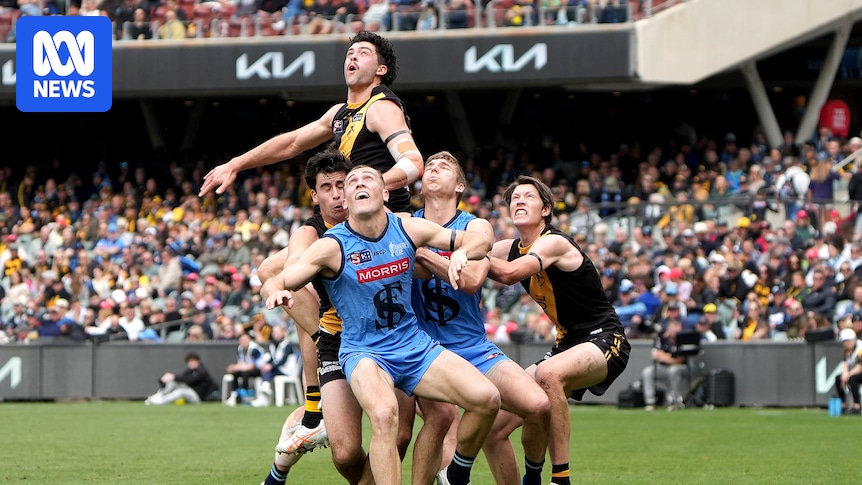
But in South Australia, where spectators recently voiced their disapproval of the current crop of AFL caretakers by booing them during the Showdown, an alternative league is quietly kicking goals and enjoying a growing audience.
The SANFL is the second-highest Australian Rules league in attendance behind the AFL, and according to its own figures, crowd numbers this year are up on those of 2025, when a total of 266,714 people attended the minor rounds and finals.
It has had steady annual growth since COVID-19 social restrictions dented its numbers, from 110,777 in 2020 to 266,995 in 2024.
Television viewership, too, has been climbing, with Channel 7’s weekly telecast game rating significantly higher than the programming of its commercial competitors this year.
Round one between Glenelg and the Port Adelaide Magpies, for example, reached an audience of 132,394 people, peaking at 50,032 watching simultaneously at one point, and an average of 39,295 people across three hours.
The 2024 SANFL Grand Final between Glenelg and Norwood attracted 35,129 people. (Supplied: SANFL)
This is well above Channel 9’s average of 29,287 people tuning in during the same three hours, or Channel 10’s 14,555.
In fact, Channel 7’s weekly broadcast of a SANFL match was well above its competitors’ programming during all six rounds, except the April 18 match between Central District and the Adelaide Crows reserves.
The league’s streaming service, SANFL Now, also hit an all-time peak of 7,576 viewers last weekend.
Darren Chandler’s says the league benefits from being under less media scrutiny than the AFL. (Supplied)
“We’re really delighted that we’re getting consistent growth since COVID,” SANFL chief executive Darren Chandler said.
“We’re not far off 2019 levels, and our last three final series have been really strong.
“We’re doing everything we can, working with our clubs, connecting with the local communities, to make sure that the SANFL match-day is an attractive place to be, particularly for young families.”
AFL fans not so happy
Conversely, according to AFL Fans Association president Ron Issko, crowd attendances at AFL matches this year “aren’t as high as last year, or the year before”.
“We did a survey last year in July, and the satisfaction levels of AFL fans was as low as it’s been for a number of years,” he said.
“Since last year to this year, I reckon it’s lower.”
Mr Issko puts it down to “frustrations” with recent initiatives like Opening Round or the floating fixture, where the AFL doesn’t announce the full fixture at once, so it can maximise broadcasting opportunities for competitive teams.
Ron Issko says the AFL has discounted general admission prices at its venues to boost crowds this year. (ABC News: Simon Winter)
The AFL Review Centre is also frustrating fans with lengthy, sometimes unnecessary score reviews and controversial interventions.
“Why aren’t they using the best cameras, or why can’t the goal umpire make a decision?”
Mr Issko said.
He said modern interpretations of the “holding the ball” rule were also driving fans mad.
“No-one understands it; players don’t understand it, fans don’t understand it,” Mr Issko said.
“The whistle blows. You don’t know if it’s going to be holding the ball, play on, or a ball up. It’s just like a lottery.”
Same rules, less controversy
Mr Chandler said SANFL rules were very similar to the AFL’s.
“The only real difference now is that we have a 25-metre penalty, whereas the AFL has 50, and our last possession rule is slightly different,” he said.
“We keep it very simple in the fact that it applies on the whole oval, as opposed to between the [50-metre] arcs, and if the umpire’s not sure whether it was a clear kick or a handball, they throw it in.
“It’s very easy for the umpires to administer.”
Free kicks, too, usually have to be earned in the SANFL as opposed to the AFL, where they are handed out easily, creating too many questionable, game-changing moments that drive fans and players mad.
“We have a real clear philosophy in our umpiring department,” Mr Chandler said.
“Our umpires are not the focus of the game; the players are, and if our umpires aren’t noticed, that’s a good thing.“
Mr Chandler, however, was quick to recognise the vast differences in the pressure each league and its umpires were under from the media and the public.
“That’s one of the advantages of a semi-professional sport is that, yes, we have significant interest from our fans, but we’re not scrutinised 24/7 with cameras at every point, media looking at every part of the game, every minute of the day,” he said.
“It’s probably a lot harder for the AFL because they’ve got cameras on every part of the game.
“[And] they probably don’t have any hope of trying to get away from score reviews because the technology will just keep coming.
“Running the AFL competition is a very complex operation.”
Strength in tradition
The SANFL was officially formed in 1877, one week before the Victorian Football Association (from where the VFL broke away in 1896 before changing its name to the AFL in 1990).
A popular league throughout the 1900s, especially the 60s and 70s, when more than a million people would attend in a season, it still holds the all-time record for attracting the most people to any event at Adelaide Oval.
This was for the Port Adelaide and Sturt grand final of 1965, when 62,543 packed out the oval, an estimated 9 per cent of Adelaide’s population at the time.
SANFL attendances took a significant hit when the Adelaide Crows were formed to join the AFL in 1991, followed by Port Adelaide in 1997.
Looking forward
After being saddled with debt, as were some clubs, when it moved to Adelaide Oval in 2014, Mr Chandler said the SANFL was now debt-free, owing largely to the sale of its land at the former Football Park site at West Lakes and “good financial management”.
“SANFL clubs have made a significant impact on the debt that they’ve had as well, so overall we’re in a good position, but we need to keep our eye on the ball and continue to grow,” he said.
Unley Oval has enjoyed some solid crowds for Sturt games this year. (891 ABC Adelaide: Malcolm Sutton)
Mr Issko said his association had a good relationship with the AFL and would continue to lobby for it to make the right decisions for the game and for the fans.
By way of example, he said the AFL had listened to fans by locking in a daytime grand final for at least the next two years despite broadcasters pressuring it for a night-time slot due to the higher advertising rates they can charge.
“In every survey, not just ours, but in the papers, through radio, three out of four people want a daytime grand final,” Mr Issko said.
“Any other statistic you hear, is bulls**t.“
The AFL also brought back the State of Origin this year.
Mr Issko accepted that the AFL needed to listen to broadcasters that paid billions for television rights, but said the fans were equally important.
“We love our clubs, and support our clubs so much that we’ll put aside the silly decisions that the AFL might make,” he said.
“But there’s a tipping point, where, if the AFL make these decisions that favour the broadcasters, the sponsors, and forget about the fans, maybe people won’t attend games as much.
“Maybe that’s happening now.”


 By
By