
While netball may be Australian girls’ and women’s top participation team sport, it has long fallen short of producing — or at least nurturing — elite Indigenous talent.
Just three Indigenous Australian women have represented the Diamonds: Marcia Ella-Duncan, Sharon Finnan-White and, after a 22-year gap, Donnell Wallam.
In 2024, Wallam left Australia for New Zealand, taking a swipe at her former club, the Firebirds, on the way out.
At the time, she wrote that the New Zealand clubs’ “respect for inclusion and culture” was a key factor in her decision to leave, while she eventually returned to the Sunshine Coast Lightning this year.
Netball Australia was not idly watching.
As accusations of a ‘toxic culture’ at the Firebirds were aired, the governing body launched an investigation and kickstarted a series of measures to enshrine ‘cultural safety’ for First Nations athletes in the sport.
This included the introduction of Australia’s inaugural First Nations team, the Black Swans, following the appointment of Ali Tucker-Munro, Netball Australia’s General Manager First Nations and former Diamonds squad member.
This is the third year the First Nations Tournament has run. (Getty Images: Daniel Pockett)
Tucker-Munro was also influential in establishing the First Nations Tournament, a yearly national championship currently being held in Melbourne, and the Spirit Series, which launched in 2026 and saw the Black Swans go undefeated against Australia’s Pacific neighbours.
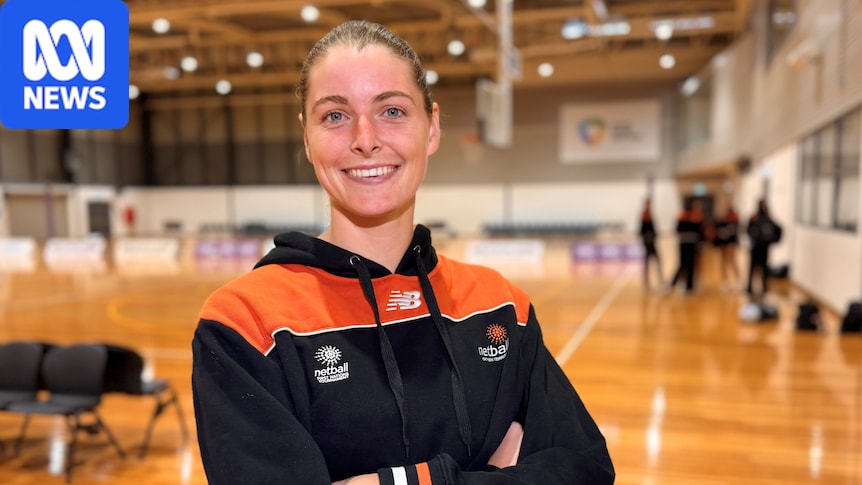
Speaking from the State Netball and Hockey Centre, Tucker-Munro, alongside players Gabby Coffey and Scarlet Jauncey, said the measures had begun to address the lack of visible role models for First Nations netballers, with more work to be done.
Embraced in Alice Springs
Twenty-six-year-old Coffey, representing the Northern Territory, is one of several First Nations netballers who have been stuck at the cusp of national competition.
Gabby Coffey says it means a lot to bring Indigenous netballers together for the tournament. (ABC News: Kyle Harley)
The defender spent four years as a Melbourne Vixens training partner before eventually making the decision to move to the UK to further her netball career.
She represented Birmingham over two seasons, and has since returned to Alice Springs.
Coffey had seen the writing on the wall at the Vixens.
“I knew there wasn’t much movement in their defensive end, and the same with a lot of defensive ends around Australia,” Coffey told ABC Sport.
While she has not given up on a professional career, she is also at peace with the idea that her role may be to support other First Nations athletes with their sporting aspirations.
The Wiradjuri woman grew up in Alice Springs, away from mob and country, but remembers being embraced by the community in Arrente.
Coffey (left) played for Birmingham in England’s top competition. (Getty Images: Morgan Harlow)
“When you grow up on other Indigenous land and tell people you’re Indigenous, they pull you into their culture, so [my family and I] were super lucky and blessed to grow up in the centre of Australia where arguably their Indigenous culture is very sacred and traditional,” she said.
Determined to pursue netball, she was advised by coach Gillian Lee to move down south, and remembers the transition to Melbourne as a difficult one.
“It was really hard being away from home,” Coffey said.
“I was really lucky with the team I entered [the Vixens] and the support I did have, but it’s not the same for everyone. There’s a lot of girls who do get those opportunities to move and then don’t last because there’s just not that support in place.”
Hailing from the Northern Territory, Coffey said, was an additional barrier.
“Even with competitions like these, we don’t get together until we’re here, and we’re training away from each other, so it can be quite a challenge.”
Visible Indigenous role models key
Asked what more could be done to help First Nations netballers make it to the elite level, Coffey said role models were key.
“If you can’t see it, you can’t be it,” she said, pointing out that there are only two Indigenous players currently in Super Netball.
Coffey says it is important to have visible role models. (Getty Images: Daniel Pockett)
Coffey said her own experience of spending multiple years as a train-on player, without breaking into the elite environment, showed how difficult it was to make it into a professional team in Australia.
“We get a number of internationals [coming to Super Netball], which I think makes the game better and more exciting, and I don’t think [that] should be restricted,” she said.
“But I do think there should be more focus on bringing Indigenous girls into the elite level.”
She pointed to Netball Australia’s plans to introduce two new teams into the competition, saying this would open further list spots.
A New Zealand team, she added, may take pressure away from the Australian players vying for contracts.
Scarlet Jauncey has spent the last year as a training partner for the West Coast Fever, pinching herself to line up on names like Jhaniele Fowler-Nembhard at training.
Scarlet Jauncey is representing Western Australia, and has captained the Black Swans. (ABC News: Kyle Harley)
A Yaruwu woman from Rubibi/Broome in Western Australia, Jauncey agreed with Coffey that cutting international talent was not a solution.
“We’re happy to be playing against the best in the world, that’s what we want,” the defender said.
Like many of her teammates, Jauncey grew up idolising Wallam.
“I think it just gives us something to strive towards, knowing that we can be in that space,” she said.
In 2025, Jauncey captained the Black Swans, in turn becoming a role model to other First Nations players.
“It was the best tournament I’ve played in, the best teams I’ve been with,” she said.
“I think just being able to come to First Nations tournaments and having that connection with each other has been really great.”
Jauncey in action during this year’s tournament. (Getty Images: Daniel Pockett)
Coffey agreed, saying the experience had given her “goosebumps”.
“I think it gives not only myself, but a lot of players so much power and push to keep going and play at the highest level,” she said.
Cultural safety means listening to community
Tucker-Munro smiles when hearing the players’ responses to playing for the Black Swans.
It has been one of her signature initiatives, alongside the First Nations Tournament and Spirit Series.
Ali Tucker-Munro is Netball Australia’s general manager for First Nations. (ABC News: Kyle Harley)
“These tournaments are aspirational in terms of trying to inspire the next generation of our kids — who we know love sport and netball in particular — to trial for their respective state and territory,” she said.
“It’s about the kids that are here this week wanting to aspire to take that next step into the big leagues in terms of Super Netball and Australian representation as well.”
Tucker-Munro acknowledged that while it was important to bring First Nations netballers into elite environments, those environments had to be culturally safe.
“First Nations people come into these spaces with our culture and community on our back, as well as cheering us on, so you want to do them proud,” she said.
“It’s also a tough journey, especially for the kids who have to relocate, so it’s about thinking strategically about how we can support them.”
Players have enjoyed coming together in Melbourne for this year’s tournament. (Getty Images: Daniel Pockett)
Since her appointment, the code has put in place a First Nations Cultural Council, and last year ran a cultural safety review in collaboration with community.
The review considered the perspectives of the wider netball workforce, including coaches and umpires as well as athletes
Tucker-Munro conceded there are “multi-faceted” barriers to having more elite Indigenous netballers, including financial constraints and geographical barriers to access.
“For too long our voice has been very silent,” Tucker-Munro said.
“We’re not a homogenous people, so it’s really important that we make sure we’re hearing the voices of many.
“One thing we’re really big on in our community is not to do things for us or to us, you’ve got to do it with us.
“There’s real intent and good will to actually drive some of this change across the sporting landscape of netball in Australia.”

 By
By