
This post may contain affiliate links. Please read my privacy policy.
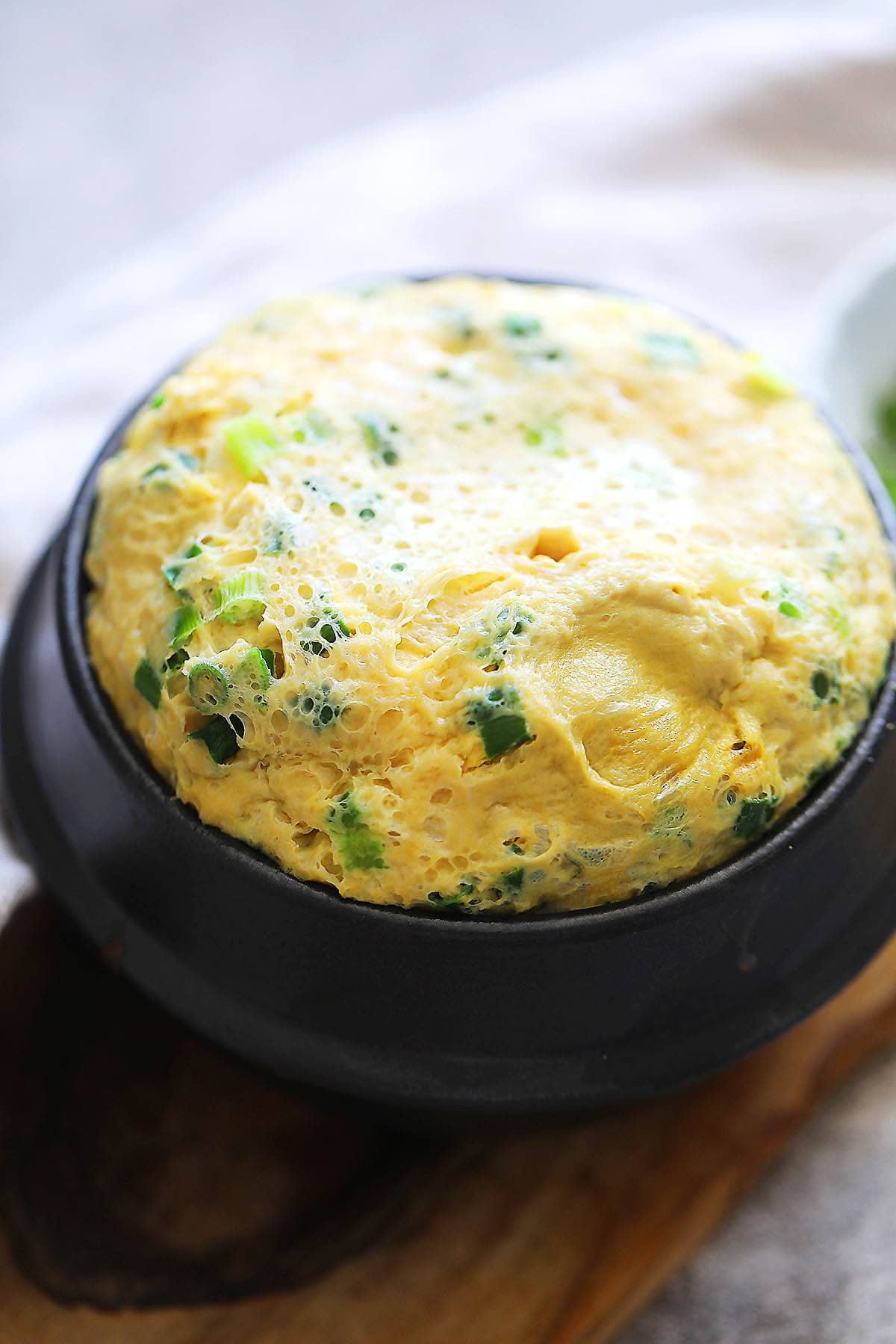
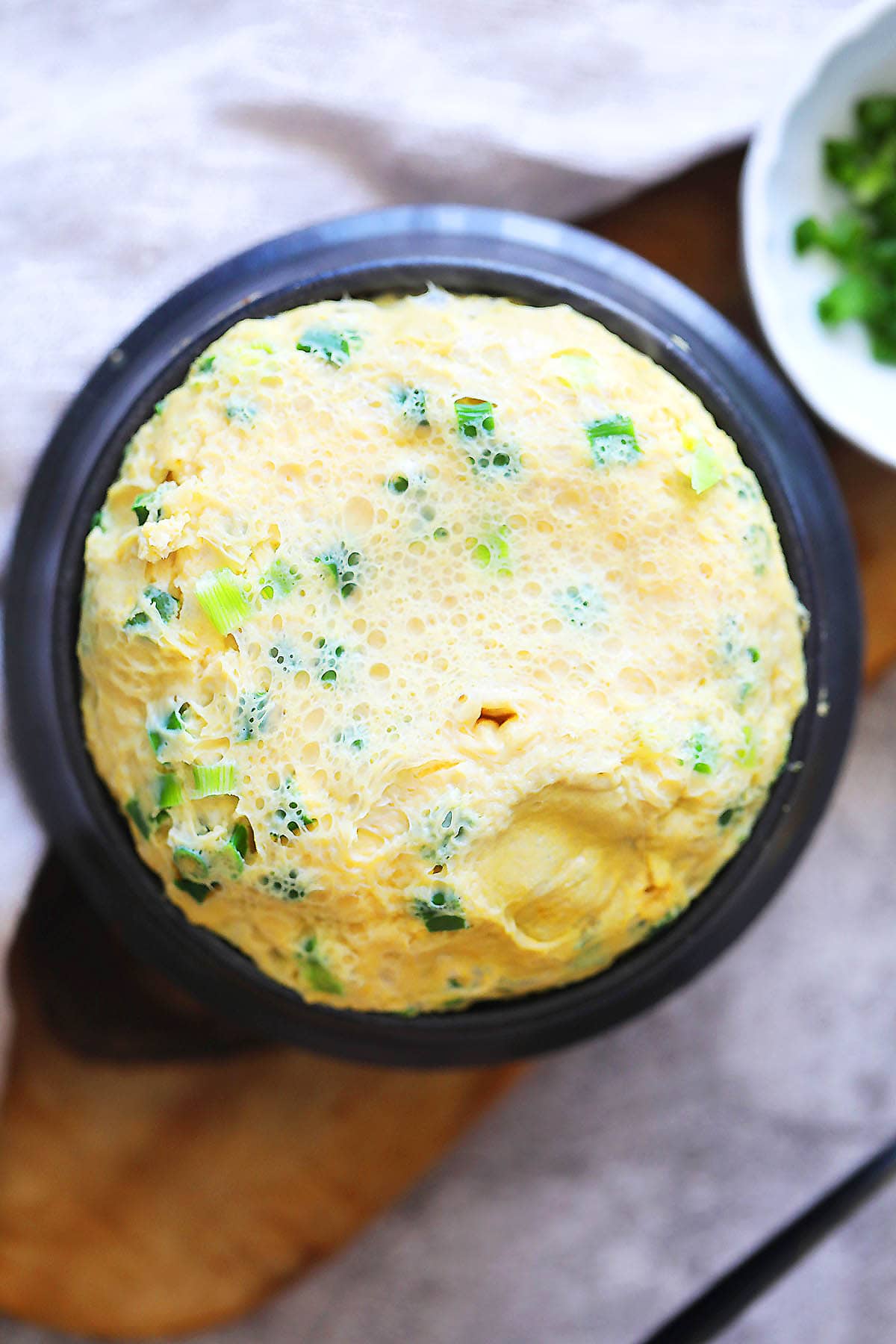
This easy Korean steamed egg recipe is made with fresh eggs and savory scallions cooked right in a traditional earthenware pot. It is the perfect comforting side dish made in just 15 minutes total and tastes just like your favorite Korean BBQ restaurant.
Recipe Summary
- 🔪 Prep Time: 3 minutes
- 👨🍳 Cook Time: 12 minutes
- ⏱️ Total Time: 15 minutes
- 🍽️ Servings: 3 people
- 🏷️ Calories: ~85 calories
- 🍳 Cook Method: Steamed
- ✨ Flavor Profile: Light, fluffy, and savory eggs with a subtle hint of fresh, aromatic scallions
- 🧩 Difficulty: Very easy (Perfect for a quick, comforting side dish)
SUMMARIZE AND SAVE THIS CONTENT ON
Korean Steamed Eggs (Gyeran-Jjim)
Everytime I head to a Korean BBQ restaurant, I always order this as a side. Known traditionally as gyeran-jjim, Korean steamed eggs are the ultimate comfort food. It is a soft, custardy staple that balances out the smoky flavors of grilled meats perfectly, creating a dramatic, sizzling volcano dome right at your table. Learning the right stovetop technique is key to getting that perfect, airy texture at home. I know there are some microwaved versions out there, but I personally avoid them, even though it might seem easier at first. They just do not cut it because they dry out the eggs and leave you with a spongy, rubbery texture instead of a delicate, melt-in-your-mouth bite.
If you want a quick and foolproof side dish to round out your dinner, this authentic recipe is exactly what you need. The secret is using medium-low heat and stirring constantly so the base cooks evenly into a light, velvety custard. This method builds up a beautifully rich, deeply flavorful caramelized bottom crust without completely burning the dish. It is a simple side dish that takes less than 15 minutes total, and it goes incredibly well with my Bulgogi, Korean Fried Chicken, or a hot bowl of steaming white rice.
Shopping Guide: Choosing The Right Tools
- The Magic Of Earthenware Pots: To get that spectacular, sky-high rise, using a traditional Korean earthenware pot called a ttukbaegi is absolutely essential. Normal pots or stainless steel saucepans simply do not cut it because they lose heat too fast and distribute it unevenly, which causes the eggs to deflate or burn before they can expand. These specialized clay pots retain an immense amount of residual heat, forcing the egg mixture to rise rapidly and evenly from all sides. For reference, mine was a small ttukbaegi with a 9.5 cm (about 3.7 inches) diameter. You can easily find them at your local Korean grocery market, Asian supermarket, or online through major retailers.
- The Dome Bowl Trick: The real secret to getting that dramatic volcano look lies in the shape of your cover. You must use a small, heat-safe ceramic or stainless steel bowl that is deeply curved rather than flat, and flip it upside down over the pot. Make sure it can fit over the ttukbaegi nicely to trap all that crucial steam inside.
My Failed Trial vs. The Restaurant Secret
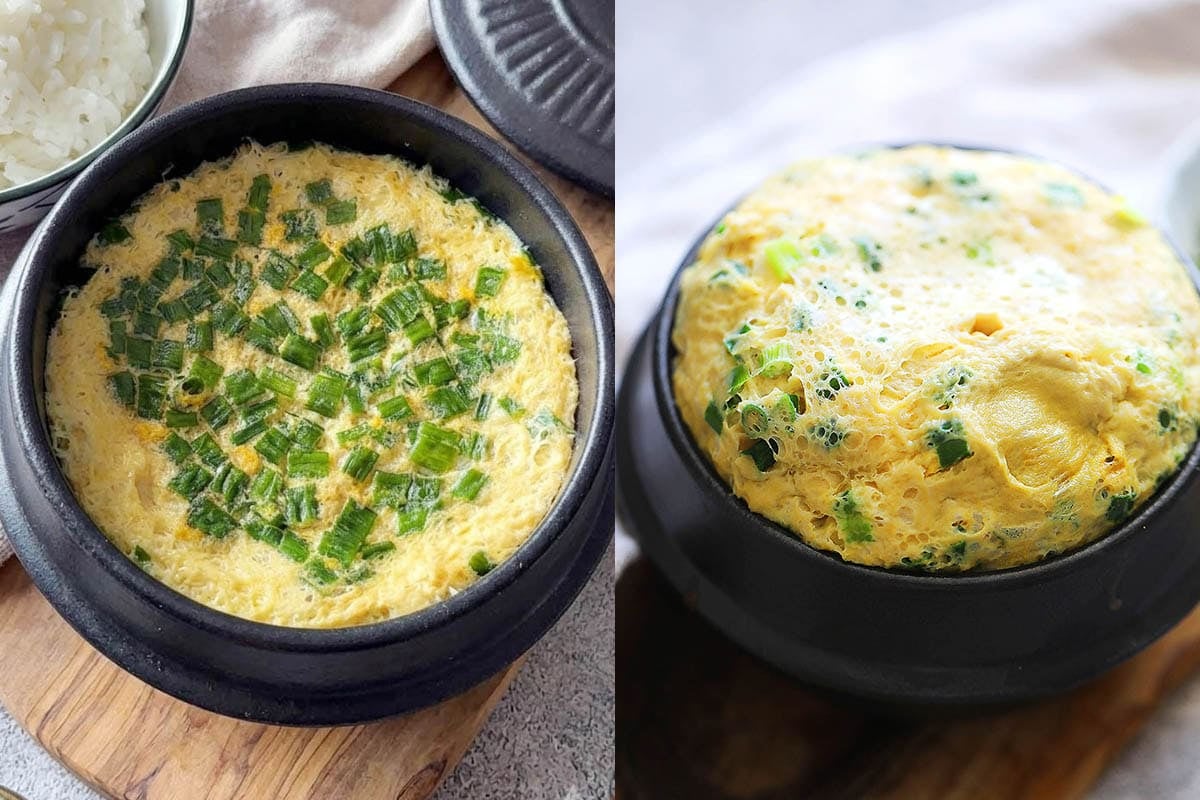
When I first tried making this at home, I assumed adding water to the eggs was the key to getting that big, volumetric lift, especially since most recipes out there include water in them. As you can see in the photo, my first trial on the left tasted fine, but it just did not fluff up at all and stayed completely flat. The water actually diluted the egg mixture too much, making it too heavy to hold its structure and lift.
Determined to fix it, I asked the staff at my favorite Korean BBQ spot how they get their eggs so puffy and tall. I was surprised when they told me the secret is not using water at all. Instead, it is all about relying on the pure, trapped steam of the eggs themselves combined with a constant stirring technique over a specific heat. I went back to the kitchen, dropped the water entirely, adjusted my stovetop method, and came up with this exact recipe. The result on the right hits the mark every single time with a beautiful, airy dome.
Ingredients You’ll Need
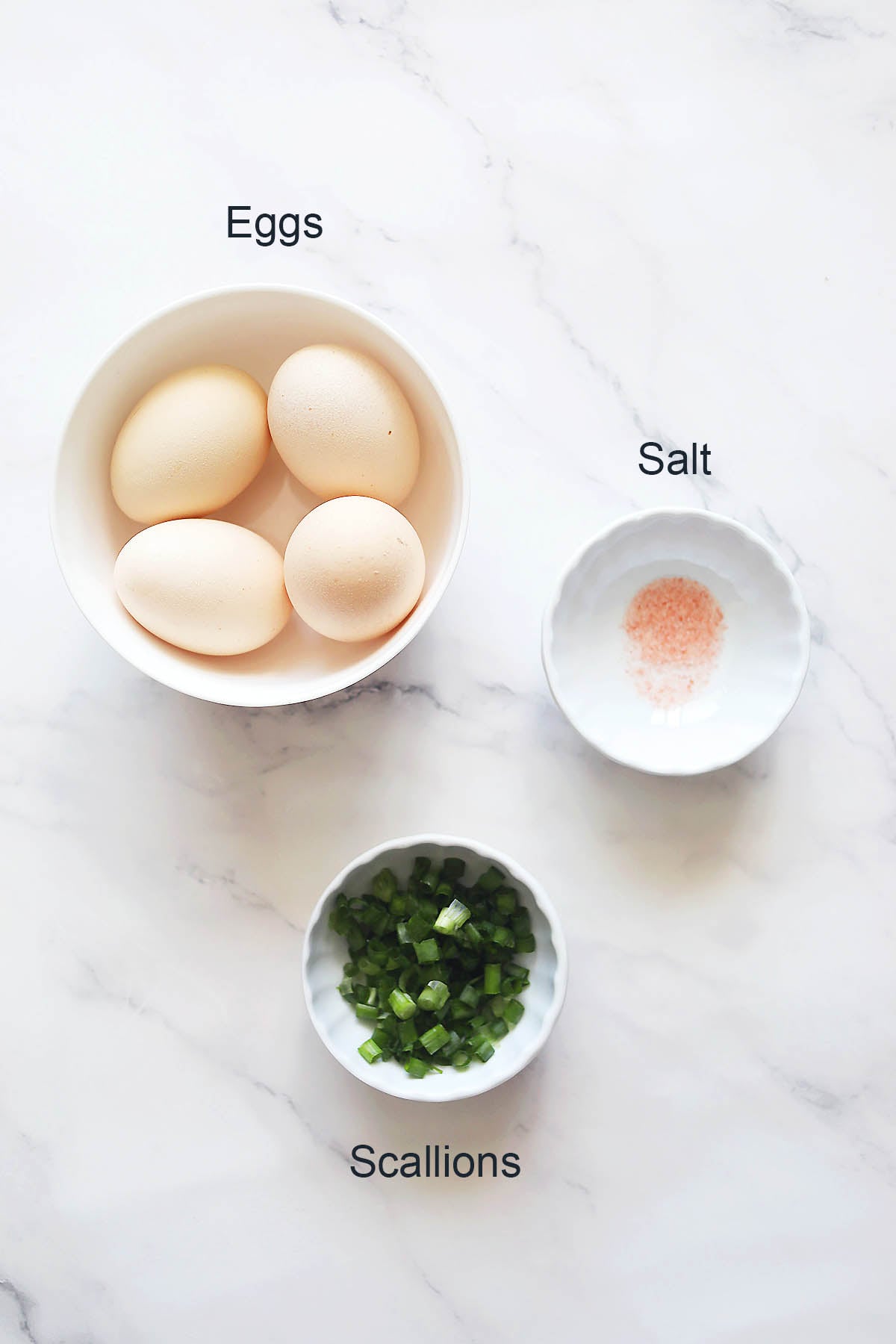
See the recipe card below for all the ingredient details and exact measurements.
Pro Tip #1: Fresh Eggs Hold The Steam
Use fresh, large eggs. Since this recipe uses no water, the rise depends entirely on the egg proteins trapping the steam. Fresh eggs have thick whites that hold their structure, giving you a towering dome that will not collapse instantly.
Pro Tip #2: Fine Salt Or Korean Fish Sauce
A sprinkle of fine salt dissolves instantly to season the custard evenly while keeping the yellow color bright. If you have Korean fish sauce on hand, you can use that instead to add a deeper, authentic umami depth to the base.
Pro Tip #3: Finely Chopped Scallions
Green scallions offer a fresh crunch and a beautiful color contrast. Mix them directly into the eggs before cooking so they soften slightly. You can also swap or add finely diced carrots if you want an extra pop of color.
Optional: Toasted Sesame Oil Finish
While I did not include this directly in my recipe steps, you can drizzle half a teaspoon of pure toasted sesame oil over the egg right after lifting the lid just before serving. This creates a rich, nutty aroma that instantly hits the table.
Frequently Asked Question
A slight deflation is normal as the cool air hits it, but a total collapse usually means it needed another minute of steaming to lock in the structure. Make sure you use fresh eggs, keep the heat on low during steaming, and never peek early.
Your stovetop heat was likely too high. Earthenware holds onto heat incredibly well. Next time, drop your burner to the absolute lowest setting the exact moment you put the dome lid on for the final steam.
Do not use harsh dish soap, as clay pots are porous. Instead, fill the cooled pot with warm water and a tablespoon of baking soda. Let it soak for 15 to 20 minutes, then scrape the residue away gently with a soft sponge.
It is best eaten fresh. Leftovers will deflate and become dense. You can store them in the fridge for up to 2 days, but they will lose their pillowy texture.
Skip the microwave because it makes them rubbery. Instead, place the eggs in a pan with a splash of water, cover tightly, and warm over low heat for 3 to 4 minutes.
This recipe is 85 calories per serving.
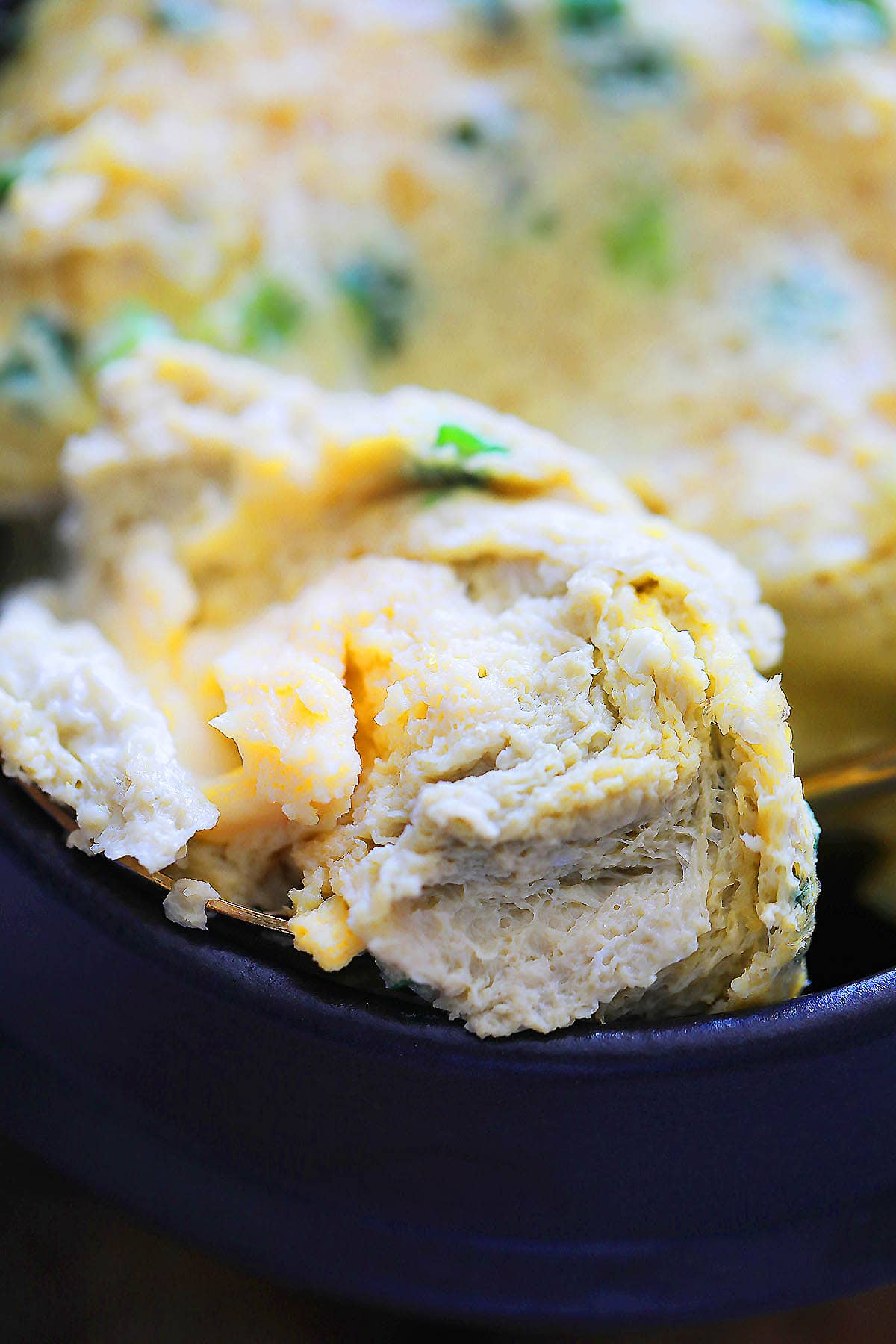
What To Serve With This Recipe
For an easy and wholesome Korean weeknight dinner, I recommend the following recipes:
I hope you enjoy this post as much as I do. If you try my recipe, please leave a comment and consider giving it a 5-star rating. For more easy and delicious recipes, explore my Recipe Index, and stay updated by subscribing to my newsletter and following me on Facebook, Pinterest, and Instagram for new updates.
Other Korean Recipes You Might Like
Prevent your screen from going dark
-
Crack the eggs directly into a Korean earthenware pot. Add the salt and the finely chopped scallions.
-
Mix everything well with a fork or small whisk until the yolks and whites are completely blended.
-
Place the pot over medium-low heat. Stir continuously, making sure to scrape the bottom and sides to prevent sticking. Continue stirring for about 4 minutes until the mixture slightly thickens and the edges start to cook.
-
Cover the pot tightly with an upside-down, dome-shaped bowl. Lower the heat to low and let it steam for 8 minutes.
-
Carefully remove the hot bowl using oven mitts and serve the puffed egg dish immediately.
Serving: 3people, Calories: 85kcal, Carbohydrates: 1g, Protein: 7g, Fat: 6g, Saturated Fat: 2g, Polyunsaturated Fat: 1g, Monounsaturated Fat: 2g, Trans Fat: 0.02g, Cholesterol: 218mg, Sodium: 116mg, Potassium: 86mg, Fiber: 0.1g, Sugar: 0.3g, Vitamin A: 337IU, Vitamin C: 0.4mg, Calcium: 34mg, Iron: 1mg
Nutrition information is automatically calculated, so should only be used as an approximation.


 By
By