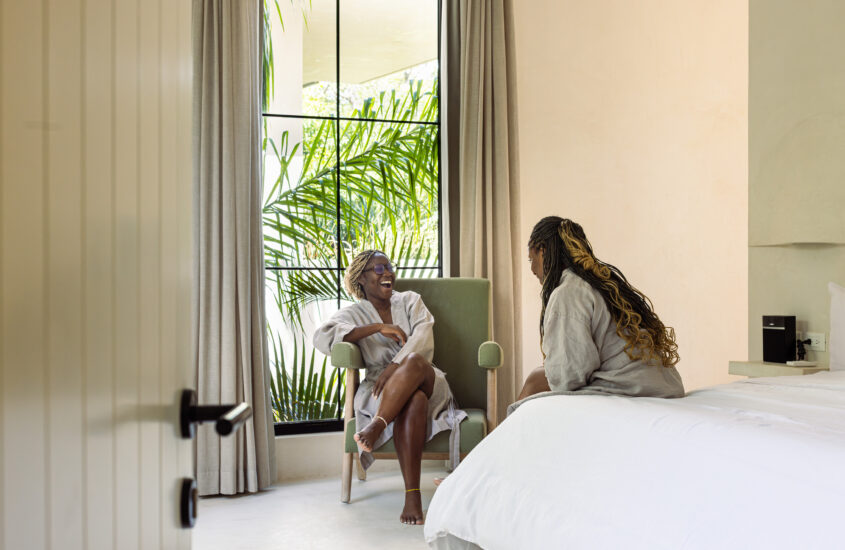

Traveling often means chasing light, moments, and the perfect shot. In this Field Notes piece, contributor Deborah Kombe puts the Canon R5 through its paces in Tulum, a Canon R5 review built on low-light dinners, rooftop pools, and every sun-drenched detail along the way.
It’s 6pm on Friday 18th July when I land in Cancún, Mexico. Warm tropical air hits my skin immediately. Within minutes, I’m through security, suitcase in hand, heading to a nearby hotel in Cancún for the night.

The drive is short but atmospheric. Palm-lined roads slip past as the sun sinks toward the horizon, spilling pinks and purples across the sky. By the time we arrive, everything feels softened by heat and colour. Check-in is quick. A golf cart takes us to the room, and stepping onto the balcony just in time for sunset feels like the trip is properly beginning.
The first thing I unpack is my camera, the Canon R5. From that moment on, it becomes my constant companion.
Finding My Way Into Photography
Before Mexico, I wouldn’t have called myself a photographer. Summer 2024 was the first time I picked up what I considered a proper camera, not counting the automatic DSLRs I used during A Level Media Studies. I had always loved taking photos on my phone or a point-and-shoot, but this was my first real attempt with serious gear.


I started with a Canon 80D borrowed from church. The results were incredibly messy: blurry frames, overexposed highlights, and compositions that didn’t quite land. I remember thinking, maybe this just isn’t for me.
That decision didn’t last. On a work trip to India, I watched a colleague shoot with ease, adjusting settings instinctively. Curiosity took over. We carved out time each week to go over the basics. I still do not fully grasp the exposure triangle, but something clicked. I stopped chasing perfection and started paying attention.


Over the following months, I became a serial camera borrower (and maybe still am), experimenting with different Canon bodies and occasionally trying other brands. Each camera taught me something new about light, patience, and storytelling, but I kept gravitating back to Canon. When the opportunity came to test the flagship Canon R5 in Mexico, it felt like the right moment and the right place.
Jungle Villas: Learning in Low Light and Bright Sun
Most of my time in Mexico was spent photographing luxury villas, but Jungle V offered the first real challenge.
On the first night, we went to a cosy pizza spot with dark, warm lighting and an open kitchen. Low light and movement usually unsettle beginner confidence. The R5 surprised me. Portraits felt intimate and textured, holding onto the atmosphere without losing detail.


The next morning brought a different kind of test. Breakfast at a light-filled café introduced soft shadows and neutral interiors. It was perfect for food photography and experimenting with natural light. That evening, a private chef prepared a meal in the villa kitchen. The lighting was unpredictable, but the camera captured warmth and detail that made every shot feel intentional.


A birthday dinner later in the week pushed things further. Shooting both photo and video in a lively, ambient space, I noticed autofocus occasionally losing its subject in the visual noise. It reminded me that even advanced systems require focus and attention. Slowing down helped.
As the days passed, I focused on photographing the villas themselves: sunlit corners, quiet poolside moments, textures softened by heat. Reviewing the video later, I noticed some clips shot in CLog3 were softer than expected. Not a failure, but a lesson. This camera rewards understanding as much as experimentation.


Villa Fosca: Confidence, Calm, and Creativity
The final stretch of the trip was at Villa Fosca by Jashita Villas. A serene, design-led space centred around a jungle courtyard and rooftop pool. By this point, the R5 felt familiar. I could read the green leveling lines instinctively, switch between photo and video modes without thinking, and even frame self-shots via Bluetooth when the app cooperated.
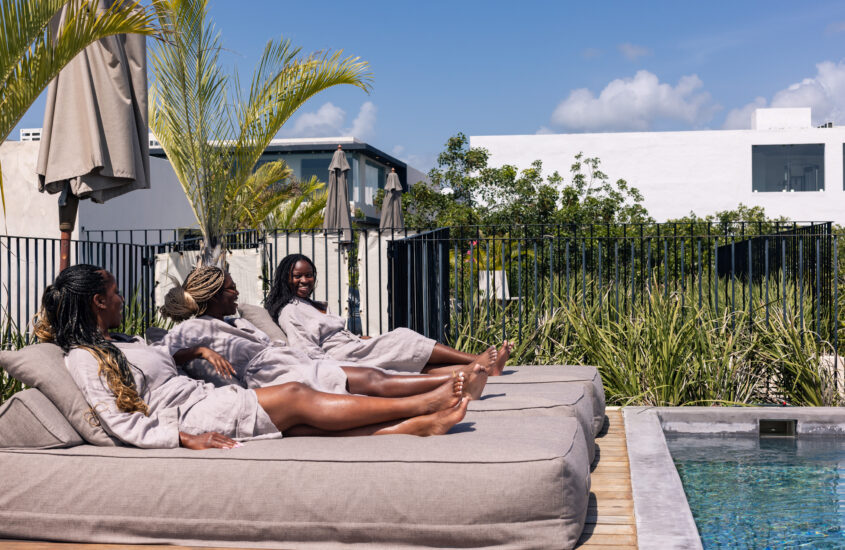
The villa encouraged a slower, more intentional approach. I experimented with simple product photography, placing electrolytes I had been testing against sunlit walls and leafy shadows. Nearby, the Jashita Hotel offered expansive beachfront views. The R5 thrived in the bright tropical light, balancing scale with detail effortlessly.

By the end of the stay, the camera felt less like equipment and more like a lens through which I was seeing Tulum itself.
Shooting Manual and Living With the Canon R5
Throughout the trip, I avoided auto modes. Every photo and video was manually controlled. It was challenging, often humbling, but it forced me to observe more closely. Light became something to work with, not fight.
The R5 felt surprisingly compact, especially compared to a Canon 6D I had packed as a backup. It was light enough to carry all day or wear around my neck comfortably. I mostly used a 50mm lens with an adapter, since my other lenses were designed for DSLR bodies. One lens refused to cooperate altogether, a reminder that adapters are not always seamless.


Battery life held up well for stills, and a CFexpress® card was essential for video. Shooting on standard SD cards quickly revealed their limits, with recording stopping when write speeds could not keep up.
Even with these constraints, the camera consistently rewarded patience. From candlelit dinners to sun-drenched villas, manual shooting allowed each image to feel considered and personal.
Reflection: Learning to See Differently
Carrying the Canon R5 changed the way I experienced Tulum. I became more attentive to subtle shifts: sunlight filtering through leaves, shadows softening across walls, and colors evolving throughout the day. Even when video footage was softer than expected, it reminded me that storytelling is about observation and intention, not perfection.


By the end of the trip, I wasn’t just proud of the images I captured. I was proud of how much I had learned about the camera and how I want to tell stories.
Verdict
For travelers and creative storytellers looking for more than smartphone snapshots, the Canon R5 is a powerful companion. It handles bright landscapes, intimate portraits, and low-light environments with impressive versatility. Video performance is strong, though autofocus benefits from careful attention in busier scenes.
There is a learning curve, and the price reflects its flagship status. For those willing to invest time and attention, the rewards are substantial. The R5 doesn’t just document moments. It encourages you to engage with them more fully.


The Canon R5 did more than capture my time in Tulum. It shaped how I experienced it. From the first sunset on the balcony to quiet villa mornings and rooftop swims, the camera challenged me to slow down, notice, and shoot with intention. It taught me that growth does not come from perfect gear but from showing up curious and willing to learn. Every image from Tulum feels less like a souvenir and more like a story I earned.
What it costs, and where to find one
I used the original Canon R5, released in 2020 at almost £4,000. Since the Mark II arrived in 2024, the original has become considerably more affordable, with new bodies typically costing £1,700–£2,900 and used models around £1,200–£1,700.
For new or refurbished stock, check Canon UK, Amazon, Wex Photo Video, Park Cameras, Clifton Cameras, Jessops and London Camera Exchange. Wex, Park Cameras and Ffordes are also worth exploring for graded second-hand bodies. Buying used can be excellent value. Check the shutter count, buy from a retailer offering a returns policy, and remember to budget for a CFexpress card if you plan to shoot video.
For travellers and content creators, the R5 remains a rewarding camera that encourages creativity and intentional storytelling. At today’s prices, it’s also far more accessible than when it first launched.
Deborah tested the Canon R5 on loan from Canon UK. All views are her own.


 By