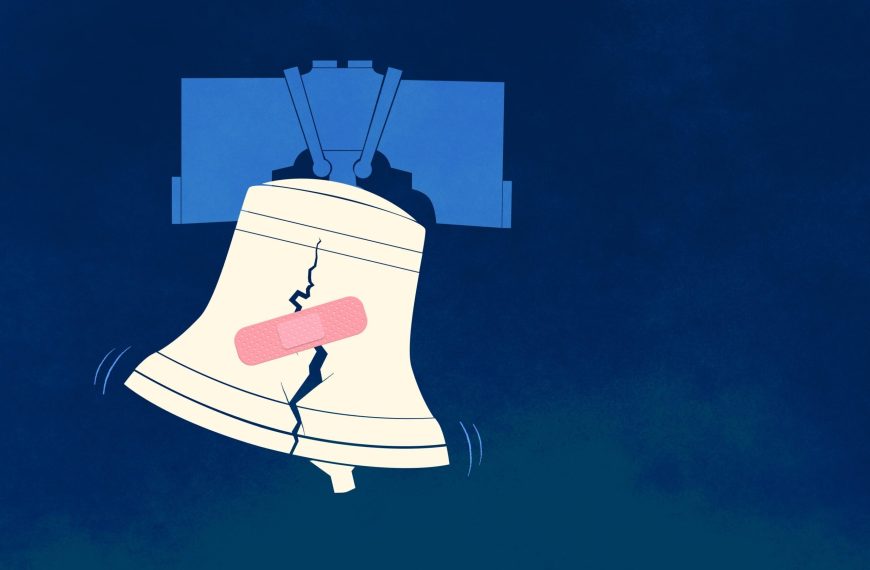


Nietzsche’s aphorism “If we have our own ‘why’ of life, we shall get along with almost any ‘how’” became the basis for Viktor Frankl’s logotherapy. In a world that increasingly seems to make little sense, perhaps recovering this school of thought can help us find meaning.
Logotherapy, or the “Third School of Viennese Psychotherapy,” did not become as widespread as the other two: Sigmund Freud’s psychoanalysis and Alfred Adler’s individual psychology. This was perhaps because the first two were more suited to the capitalist nature of the productive system in which they emerged.
For Freud, the core human drive is the will to pleasure. From early development, when our unconscious desires conflict with reality or societal rules, we repress them into the unconscious. Later in life, these repressed impulses re-emerge as internal friction between the Id (instinctual desires), the Ego (our conscious self), and the Superego (societal expectations)—making this inner tension the central drama of human life.
For Adler, the core human drive is the will to power—specifically, a drive to move from a feeling of weakness or inferiority toward mastery and completion. We are social beings who crave belonging; when we feel inadequate, we develop an inferiority complex. We try to resolve this either healthily through community cooperation, or neurotically by striving to overpower others to hide our vulnerability.
For Frankl, the main human drive is the will to meaning. We have an innate need to make sense of our existence—not just through rational cause-and-effect, but by discovering a personal purpose in everyday life. The absence of meaning creates an existential vacuum (apathy and emptiness). While suffering itself is an unavoidable part of life, anchoring that suffering to a meaningful “Why” makes it endurable and transforms pain into meaning.
Although each of these schools has its own applicability, the first two are strongly anchored in a sense of individuality. For Freud, every problem of the present can be found in a repression of the past. For Adler, it is the individual who adapts to the circumstances in order to fit in. For Frankl, however, meaning is not something found strictly within oneself, but something to be found in an encounter with “the Other.”
Meaning, according to Frankl’s thought, can be pursued through three pathways. The first is through creative values: creating a work, doing a deed, or accomplishing a task. The second is through experiential values: experiencing something or encountering another through love. The third is through the stance we take toward unavoidable suffering or an unchangeable fate. Meaning, in this sense, is not something that we simply create on our own, but something we build in relationship with “the Other.”
This requires a proactive, creative approach to the world. We do not just resolve our issues simply by sitting on the couch or negotiating with our circumstances to find an equilibrium; we resolve them by creatively engaging with ourselves and our surroundings. We change ourselves, and through that change, we change our circumstances.
This might at first sound like a kind of “toxic positivity,” but it is exactly the opposite. Logotherapy was explicitly constructed in order to answer the “tragic triad”: pain/suffering, guilt (awareness of fallibility), and death (transitoriness of life). It practices “tragic optimism”—the capacity to say “Yes” in spite of the tragic triad by turning suffering into human achievement, guilt into an opportunity to change for the better, and life’s transitoriness into an incentive to act responsibly in the present.
It is this particular quality of logotherapy that could help us most in our current circumstances. For many, if not most—excluding an ever-diminishing elite—life is becoming increasingly difficult and increasingly meaningless. This difficulty and meaninglessness create frustration, which in turn generates conflict.
Frustration is becoming a structural characteristic of our social system. There is frustration at the geopolitical level, there is frustration and the political level, and there is frustration at the social and individual levels. At the geopolitical level, frustration is reflected in the impossibility of nation-states, or federal superstates, to establish their aims amidst increasing resource competition. At the political level, the state cannot deliver its promises to citizens. At the social and individual levels, the prospects for life are bound to be worse, not better.
The inability to overcome frustration in a creative way that might generate meaning across these three levels inevitably creates conflict. This becomes a feedback loop in which conflict generates more frustration, which generates more conflict.
There are many possible examples of this. Trump’s war on Iran is one of them at the geopolitical level. At the geopolitical level, aggressive military foreign policies serve as prime examples. Amidst the frustration of an hegemonic decline that seems unavoidable, a war may be launched to assert domination and control resources. However, the war itself becomes a source of further frustration because it cannot achieve its aims, which then generates more conflict.
At this level, logotherapeutic principles could be applied by a nation accepting an unavoidable loss and finding meaning by creatively responding to it. For this school of thought, that would imply redirecting state energy and resources toward a cause greater than the state itself: improving its citizens’ lives by restructuring society and finding a kind of social transcendence. However, those in power often choose to change everything except themselves—the status quo.
This is Adler’s “will to power” in action, creating a neurotic state by aiming to dominate others. Adler’s correct response would be to try and find a balance. However, we might already be past that stage; what we need now is a creative response that infuses new meaning into our civil institutions. But, according to Frankl, that requires “changing oneself.”
The politicians who manage the state, at different levels of autonomy, find that politics has become frustrated because they can hardly deliver on their campaign promotions, with their agendas and budgets increasingly dictated by external needs. They also find they have little room to maneuver in an increasingly sophisticated system that, in many cases, has devoid politics of real power.
German politics serves as an example. The direction of the state is increasingly dictated by macroeconomic indicators and financial market needs. Politicians have little room to respond to national necessities, like addressing deindustrialization or the migration crisis. This generates frustration, which translates into social conflict and increasing polarization—feeding back into more frustration and more conflict. Breakout will require a creative act that will reintroduce meaning to politics again, understood as governing for the common interest of the citizens.
Finally, almost any citizen of a Western country is feeling frustrated because their future life prospects—and those of their children—seem to be worse than those of their fathers. In a society where one of the main, if not the most important, measures of success is material, that is a real source of anguish and frustration. This creates conflict with the political class and among citizens themselves, with an increasing divide depending on who they decide is to blame (immigrants, Muslims, communists, fascists, etc.).
This is perhaps the arena where logotherapy is most directly applicable, as it is precisely what it was designed to address. It requires a creative act by the individual to step out of themselves, engage with the frustration of their circumstances, and turn it into a new creation.
I acknowledge that I have oversimplified for the sake of the argument and that the scope of analysis and application outlined here is almost strictly Western. I also understand that logotherapy in and of itself is probably not a single saving grace. But I hope that, in a world that has mostly been seen through the eyes of psychoanalysis and individual psychology, bringing it to the table offers a refreshing look, and, perhaps, may even spark some creative act.


 By
By