

[This post launched before complete because I had to go out. The final version should be up by 8:00 AM EDT, so please return or refresh this page then]
With Israel already undermining Trump’s hoped for “deal” by keeping up attacks in southern Lebanon, a big new front has opened up in the US. And it is only in part due to Israel/AIPAC string-pulling. The terms of the Memorandum of Understanding (MOU) have been a state secret. There are serious differences between what Iran and the US say some particular terms are, critically on whether Israel will withdraw from Lebanon or merely cease hostilities. You can see the list leaked by Barak Ravid in footnote 1 below, along with DropSite segment which discusses differences in what the two sides are saying about Israel withdrawal from Lebanan as well an analysis by Larry Johnson. Mind you, Larry relies on the 14 point list released by Mehr News contrasted with a version published by Bloomberg as his basis for what Iran thinks it has agreed to; I have not been treating the Mehr News version as dispositive, as in Mehr might not have had access to the most current version.
Keep in mind, as Larry and a Daniel Davis in a discussion reproduced below stress, this suggests the text is final or the US mistakenly believes it can force a late-in-game revision.
Nevertheless, the general profile of the MOU has been in view. The chattering classes were besides themselves over some of the items that seem to have made their way from the Iran media into general circulation; the US has more recently leaked what it depicts as the terms to some outlets.And mind you, these talking head explosions are nearly always over individual terms, like Iran getting some of its frozen assets back very early on or Iran supervising the Strait of Hormuz and changing fees after the first 60 days. Imagine how choleric they’d be if they had read the full 14 point list which the Iran side indicates has been largely incorporated in the MOU (this is now in the process of happening after the Administration started circulating text, as mentioned by DropSite)
Trump is hoist on his PR petard. Trump, Hegseth, Lindsey Graham and Fox mouth-breathers like Jack Keane have been insisting that Iran has no military or economy left, that the US has control of the Strait of Hormuz, that Iranians are just about to overthrow the government. Trump’s success in keeping oil prices down, both through his 39-times-and-counting “Deal is nigh” act plus Strategic Petroleum Reserve draw-downs, means that voters are not seeing much in the way of economic effects of the Strait of Hormuz closure, and the recent drop in gas prices signals conditions are improving.
So the overwhelming majority of Americans have no clue that the US cannot subdue Iran by military means and economies all around the world on existing trajectories will soon suffer a cost shock and potentially in some areas, shortages, when the oil cliff arrives. Even if most citizens want the US out due to the high cost of the conflict and lack of any national security justification, they are utterly unprepared for the extent of concessions the US has to give to extract itself from this mess. Hence the shock and anger, particularly from the pundit classes who often emotionally invested in US primacy.
So the Administration may be trying to manage expectations by lying about what the “deal” amounts to, as in either denying or not very artfully finessing points that Iranian officials depict as agreed. And that is before getting to the fact that the somewhat more US-favorable language it depicts as agreed is mere porcine maquillage.
Either Trump sticks to his guns and proceeds with the MOU to forestall the even worse pain and higher political cost of breaching the energy cliff, or he tries to renegotiate, which will push back the “opening” of the Strait of Hormuz and bake in the arrival of the energy cliff in late July to August.
In an absolutely must-watch video, Robert Pape describes how the “deal” is an absolute Iranian win, and the dynamics of the risk of hitting the oil cliff gives Iran even more leverage over the period of the negotiations. Pape is openly admiring of what the Iranians have achieved in power terms, depicting them as having upped their game and now having risen to an A- in their skill in operating, just a rung below the Kissinger level.
We will turn later to a point we omitted yesterday in our discussion of the energy cliff, which Jeff Currie uppacked very well in a new clip we have embedded below and reader vao also raised in comments. Even though, as Pape again stresses will take at least 30 to 60 days for energy shipments to start arriving out of new production in the Gulf, there is one last inventory, in the form of the oil tankers trapped in the Gulf. And vessel operators will have a somewhat lower risk tolerance in deciding to let those vessels transit out than for risking sending ships back in on a round trip. So there will be a short-term reduction in pressure on the markets during that extension of the draw-down period. But as you will see, Currie does not deem it to be terribly consequential even though it would be very helpful to Trump near term.
And an offset to that may be the way that Trump has made an issue of needing to de-mine the Strait of Hormuz. If Iran mined at all, it would be in the former main transit route, in the center of the Strait of Hormuz. Iran has set up two lanes to the north of that, close to the Iran coast, so in reality there is no impediment to safe travel. The US, by hyping the idea that the Strait is hazardous ex its intervention, will create even more delay to getting shipping back to something dimly approaching the old normal. See for instance, Economic Times in What to know about the demining and escort mission that US allies want for the Strait of Hormuz:
The naval mission for the Strait of Hormuz that U.S. allies are proposing as a follow-up to a deal to end the Iran war would aim to reassure crews and shipping insurers that vessels can safely navigate the narrow waterway again, by removing any explosive mines and potentially providing military escorts.
France and Britain have been working on the plans for months. French President Emmanuel Macron floated the idea back in March when the war was raging, saying warships could escort tankers and container ships through the maritime chokepoint when the conflict dies down.
So Pape’s assumed 30 to 60 days to get the tanker pipeline refilled may wind up being even longer if ship operators hold back from sending vessels back into the Gulf for even a week, let alone a few weeks. Note that reader farmboy has also provided details on the extend of oil leases from the Strategic Petroleum Reserve. I have seen little to indicate if those amounts are included in the EIA totals and what rights the Feds have to require any amounts outstanding to be returned
We had depicted the bargaining positions of the two sides as in different universes. Daniel Davis documents that that chasm is pretty much intact, at least if you go from many statements in the US media. So he wonders: will Trump go ahead with something like the deal as described by the Iranians, and risk widespread condemnation? Or will he try to renegotiate the understanding markedly between now and Friday, which would blow up the “deal”? Davis was strongly of the view, even before the Axios story on the infighting over it broke, that this agreement is not likely to be consummated:
I am enormously grateful to Davis for having the patience to go through a significant number of the major disconnects between what US officials are saying is in and out of the Iran “deal” versus what the Iranians have consistently presented. He also covers the disconcerting fantasies of some influential commentators such as Jesse Waters of Fox.2
The notorious fake-deal flogger and suspected Israel asset, Barak Ravid of Axios, is amplifying efforts within the Administration to derail the MOU, via his story . Note that the language that Ravid presents is at odds with positions Iran has consistently taken regarding nuclear enrichment: that it will not give that up as a sovereign right permitted under the NPT and would not have its enriched uranium leave Iran (it briefly seemed to entertain the idea of letting Russia hold it but that did not last long). There have been rumors via negotiators that Iran might be agree to downblend to the 3.67%, a civilian-use level. Note Iran had offered to do that in the pre-war talks.
I find the specificity of the language that Ravid depicts as in the MOU to be surprising. IIRC, Jeremy Scahill, who has been speaking regularly to the negotiators, had more than once depicted Iran as unwilling to make any commitments in the MOU regarding nuclear enrichment were simply to re-amplify, in the strongest manner possible, Iran’s long-standing position of not seeking to develop or possess a nuclear weapon.
The specific language that Ravid (separately) depicted as in the MOU is “US and Iran pledge to resolve issue of disposal of enriched uranium stockpile.” I take that at a minimum as a commitment no one can actually make, to agree not to disagree during the detailed talks with no initial anchoring of what the resolution might be. But I also see this section as enabling the Trump fantasy, that the US will go in (now with Iran assistance as in Kazakhstan) to remove the “nuclear dust”.
From Axios in Scoop: CIA director doubts Iran’s intentions on deal, sources say:
Behind the scenes: There were a series of high-level meetings about the deal between Trump and his advisers in the lead-up to Sunday’s announcement.
- During those meetings, Trump and his team discussed intel gathered by several U.S. intelligence agencies that showed that the way Iranian officials were discussing the deal among themselves was inconsistent with what they were telling the mediators and the U.S., two sources said.
- Ratcliffe and Rubio said that based on that intel, they doubted the Iranians would agree to take the nuclear steps the U.S. was seeking, according to two sources.
- “The intelligence reflects that the Iranian intentions are not in line with their commitments under the deal,” a source said…..
- “This MOU meets all of the redlines that the administration has long articulated by ensuring that Iran can never possess a nuclear weapon, they cannot keep their highly enriched uranium, and they cannot hold the world’s energy supply hostage,” the official said, adding that Trump would only agree to a “good” final agreement….
Between the lines: The full text of the 14-point initial deal has yet to be published, but a source familiar with the text contended that the Iranians will get more than they give under the MOU — unless they agree to sign a nuclear deal that meets the U.S. objectives.
The flip side is this unseemly tale could have been leaked to accelerate the overdue defenestration of Hegseth and Ratcliffe. The Mirror retells an account from the Israel press in Trump eyes firing Pete Hegseth and CIA chief John Ratcliffe over Iran deal clash (hat tip Ann):
President Donald Trump is allegedly considering firing those staffers who opposed his signing a deal with Iran that would negate their ability to make nuclear weapons.
Sources close to the administration told Israel Hayom that some officials who could face the president’s wrath include Secretary of Defense Pete Hegseth and CIA Director John Ratcliffe. “he debate has been settled. Anyone who opposed it could pay a personal price,” the source said
In addition to dissent in the US, Israel is still predictably trying to wreck the deal by attacking in Lebanon. In footnote 1, we describe how Iran has made clear that this is a non-starter as far as negotiations are concerned. From the summary at the top of Aljazeera’s live feed:
Iran has accused Israel of violating the truce in Lebanon 84 times since it reached the agreement with the US and warns of a “harsh response” if attacks continue.
One of the entire in the body has Israel whinging that it can’t withdraw from Lebanon. Seriously? How long does it take to drive or even walk to the border?
Israel experiences ‘crisis of trust’ with US over Lebanon deal
A senior Israeli official has acknowledged “a crisis of trust” as the US refuses to brief Israel on the details of the Iran deal out of fear it might leak its contents and launch a media campaign against it, a local news report says.
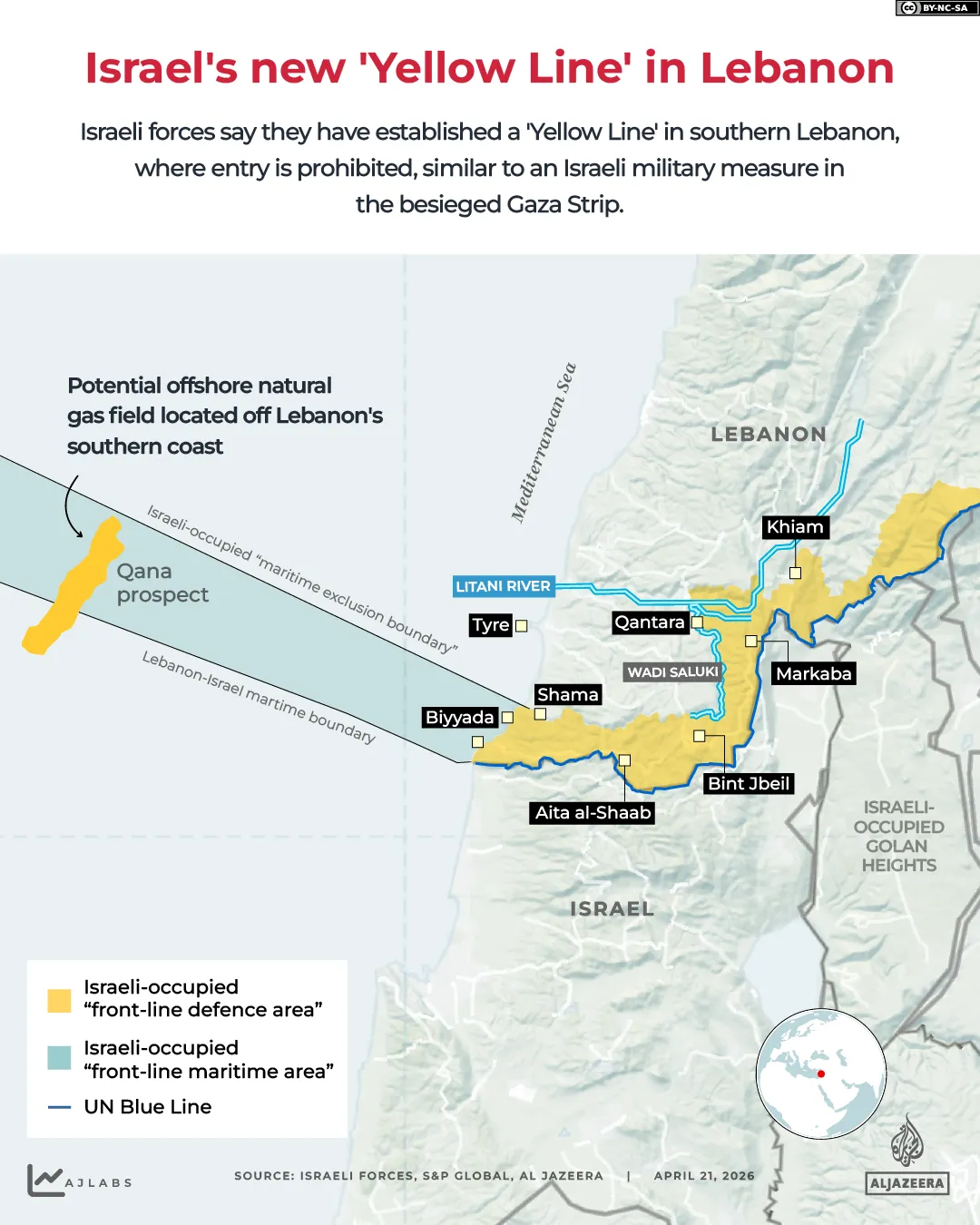
Israel’s Channel 13 reported the Israeli army fears Friday’s US-Iran talks in Switzerland may reveal that the agreement stipulates an immediate and full withdrawal of Israeli forces from southern Lebanon – all the way to the international border, not only its “Yellow Line”.
Another recap from the same Channel 13 story, from Middle East Observer on Twitter:
⚡️ Channel 13, citing military sources: The Israeli army fears that the United States will impose an Israeli withdrawal from Lebanon on Friday.
– We have accepted the reality that the United States determines what happens with Iran, but we seek to be influential regarding the situation in Lebanon.The army is not prepared to carry out such a withdrawal at this time, the news report said, as frustration and uncertainty prevail within its ranks as it awaits final instructions from political leaders.
Trump still believes that having temper tantrums is effective. From Ahmad Samadi on Twitter:
Translated from Persian
🔴🔴Important// Donald Trump: If I don’t like the memorandum of understanding with Iran, I’ll drop a bomb right on their heads.
The US President, on the sidelines of the G7 summit, regarding the memorandum of understanding with the Islamic Republic, said:This is a memorandum of understanding. And if I don’t like it, we’ll fire back at them again and drop bombs on their heads.
He added: If I’m not satisfied with it, if their behavior isn’t appropriate, we’ll go back and drop a bomb right in the middle of their heads. Got it?Because they’ve been misbehaving for 47 years. Right?
Now to more on the oil cliff. This Bloomberg interview with Jeff Currie is another must watch:
Currie discusses the uncertainty among shippers, which will persist after the MOU is signed. He describes the issue we highlighted above, that there is oil now in tankers in the Gulf that will get on the market quickly but that is only ten days of supply. He also says the inventory situation is even worse than it appears, because traders, consumers and businesses have held back from buying since they expect lower oil prices.
And an item that should be funny if it were not sad:
New: US intel agencies have recently assessed that Iran can effectively turn the Strait of Hormuz on & off — at will — going forward, meaning it has acquired a powerful new ability to hurt the global economy as a result of Trump/Israel starting the war, sources tell me &…
— Zachary Cohen (@ZcohenCNN) June 16, 2026
How long has this state of affairs been obvious? The spooks have worked this out only now?
And some intended dark humor:
The collective response today from Democratworld to the Iran/Trump peace honestly pretty well sums up why this disastrous war was allowed to happen in the first place.
— Branko Marcetic (@BMarchetich) June 16, 2026
Nobody in the world but Donald Trump who managed to stop Iran from having a nuclear bomb it never wanted. He is the world’s hero.
— Elijah J. Magnier 🇪🇺 (@ejmalrai) June 17, 2026
Done for today! See you tomorrow!
_____
1 Via DDGeopolitics:
·
🇺🇸🇮🇷 BREAKING!! Israeli Channel 12’s Barak Ravid says that he has obtained the key points of the MoU between the US and Iran:
— Iran, the US and their allies will cease hostilities, including in Lebanon
— Iran reiterates its commitment not to develop or acquire nuclear weapons
— US and Iran pledge to resolve issue of disposal of enriched uranium stockpile
— US and Iran to discuss enrichment issue and Iran’s nuclear needs
— Iran will maintain status quo on its nuclear program as long as negotiations continue
— The US will lift the naval blockade, not impose new sanctions, and will not increase forces in the region during the negotiations.
— Iran will make the necessary arrangements to ensure safe passage of commercial vessels through the Strait of Hormuz, free of charge, for 60 days.
— US pledges to make frozen Iranian assets available for use with implementation of MoU
— If a final agreement is reached, the US will withdraw its forces within 30 days and lift all sanctions on Iran.
— Any final agreement will include a plan to establish a $300 billion fund for Iran’s reconstruction.
— US to give Iran temporary sanctions waivers to sell oil during negotiations
— Negotiations will be held between Iran and Oman with the participation of Gulf policy to define “arrangements regarding shipping and maritime services”
The DropSite segment:
Near the top, Jeremy Scahill via a lightly edited machine-generate transcript:
This is not verified. This is what U.S. officials are pushing right now as the text regarding Lebanon, that it says
The Islamic Republic of Iran and the United States, together with their allies in the current war, declare upon signing this memorandum of understanding an immediate and permanent end to the war on all fronts, including Lebanon, and undertake that from now on they will not launch any hostile action against each other and will refrain from the threat or use of force against each other.
The final agreement will confirm the provisions of this article and the remaining articles.Now, Mohammad Ali Shabani from Amwaj News, who was a guest on this show last week, said that he had been shown by sources a paragraph of that same paragraph that had different phrasing that said that Iran and the U.S., quote,
…and their allies in the current war declare the immediate and permanent termination of military operations on all fronts, including in Lebanon, and undertake from now on not to initiate any war or military operation against each other and to refrain from the threat or use of force against each other and
and this is what is the big change
ensuring the territorial integrity and sovereignty of Lebanon.
If that’s what the text says, then Iran would be arguing that occupation forces, Israeli occupation forces, simply remaining in Lebanon is a violation of the memorandum of understanding.
Mind you, a bit earlier, Scahill had expressed doubts that Iran had gotten the US to give language that would commit it to getting Israel to pull out of Southern Lebanon.
Later, from Sharif Abdel Khouddous:
We had the foreign minister today say, as Jeremy said, you know, there’s two parts of this memorandum.
One side is America and Israel, and the other side is that Iran and Hezbollah.
And then he said, this is perhaps the most important issue in the memorandum.
And I’m quoting here. He says, any military attack by the Zionist regime on Lebanon from now on and the continued occupation of Lebanese territories from now on will be considered a violation of the memorandum of understanding in our view.
So Iran is making it crystal clear that they are not allowing the U.S. or Israel to de-link these two things.
And from Larry Johnson in The US and Iran Versions of the MOU Show Major Areas of Disagreement:
If the respective US and Iranian reports are true, then there are significant differences still separating the two sides. Bloomberg’s reporting (based on drafts it reviewed) and Iranian versions (primarily from state-affiliated Mehr News and officials) of the proposed 14-point US-Iran Memorandum of Understanding (MOU) show significant overlap on core elements but notable differences in emphasis, specifics, and interpretation — especially on financial relief, Hormuz management, and future negotiations….
Despite the insistence by both the US and Iran that the MOU will be signed on Friday, there are clear differences between the Iranian and US versions that, if not resolved, I believe will torpedo the signing ceremony. There are seven major areas of disagreement observable in the public versions:
Preconditions for entering negotiations:
Iranian version explicitly states that final negotiations will not begin until some oil sanctions are suspended, part of the frozen assets are released, and the naval blockade is lifted — making US action a precondition for Iran coming to the table.
US/Bloomberg: Broader potential (nuclear + other issues like regional behavior). The US version conditions Iranian benefits on Iranian performance.
Frozen assets:
Bloomberg/US-leaning drafts: Emphasize phased, performance-based relief (e.g., oil sales waivers first, then broader access tied to nuclear compliance). Reconstruction fund (~$300B) is conditional on a final deal. A senior US official told reporters the deal was strictly “pay for performance” — no funds released without Iranian compliance first.
Iranian versions (e.g., Mehr): Highlight more immediate/concrete gains, such as release of $24–25 billion in frozen assets during the 60 days, half upfront or quicker oil sanctions waivers, and stronger commitments to reconstruction funding. Iran’s Mehr News version specifies $12 billion of Iran’s frozen funds to be released beforenegotiations begin, with another $12 billion released during the 60-day final negotiation window — $24 billion total.
Scope of final negotiations:
Iran’s version limits the final talks strictly to nuclear and economic/sanctions issues — explicitly excluding Iran’s ballistic missile program and its support for regional proxies (Hezbollah, Houthis, etc.). This is in direct conflict with Trump’s stated position that missiles and proxies must be on the table.
Sanctions relief scope:
Iran’s version calls for the lifting of oil and petrochemical sanctions and a US commitment to withdraw forces from areas surrounding Iran and impose no new sanctions or force deployments during negotiations.
The Bloomberg version does not include explicit sanctions relief commitments upfront.
Iran’s nuclear commitments:
Iran’s version has Iran reaffirming its NPT commitment not to produce nuclear weapons.
The US position, as stated by Trump to the New York Times, is that Iran must be permanently blocked from ever acquiring a nuclear weapon, which implies far more intrusive verification and limits on enrichment than a simple NPT reaffirmation.
UN Security Council ratification:
Iran’s version calls for any final agreement to be approved through a UN Security Council resolution — a significant demand that would give China and Russia a formal role in guaranteeing and potentially enforcing the deal, which the U.S. has not acknowledged.
Strait of Hormuz:
Bloomberg/US view: Full reopening to pre-war commercial traffic without tolls, safe passage, and return to normal flows (potentially within ~30 days).
Iranian view: Reopening yes, but under Iranian (and Omani) sovereignty/management. Iran may impose “service fees” (not called “tolls”) for security/environmental reasons; separate rules for military vs. civilian vessels.
2 If you have more tolerance for pain, this discussion on CNN is a doozie:
3 From Jeff Currie below:
From a lightly edited machine transcript:
Okay, so let’s say they agree to bring the ships back in. Then you have to go find the ships and the ships are all out of place right now. It’s going to take, you know, a bare minimum 6 to 8 weeks just to get the ships back after you’ve de-mined it.
Then you’ve got to they’ve got to feel really comfortable that there’s not going to be another outbreak and you got your ship trappped in there. And so that means you’ve got to have some time behind this and be comfortable that that it’s a sustainable deal.
So I think there’s there’s a lot of question marks that remain open here which means in the interim you’re still drawing inventories, markets are getting tighter and creating the potential for substantially more upside [for oil prices].
Note that elsewhere in this talk, Currie mentions #1 tanker company Mitsui, which has indicated it will be cautious about sending ships into the Gulf, as has #4 container company Maersk (I have not been able to find quickly where its tanker operation, with is a separate business, ranks).
However, in his talk below, Sal Mercogliano shows a vessel tracker (starting at 5:15) with lots of tankers lining up to get into the Gulf. He also mentions that current rates are ginormous. So it seems that some operators will move with alacrity while others are in “Show me” mode.


 By
By